Call 801-233-1564
Serving Salt Lake • Ogden • Provo • Park City
Licensed Contractor
Air conditioning repair is the process of diagnosing and fixing a malfunctioning cooling system — and knowing the basics can save you time, money, and a lot of sweat.
Quick answer: Here's what most homeowners need to know right away:
| Question | Short Answer |
|---|---|
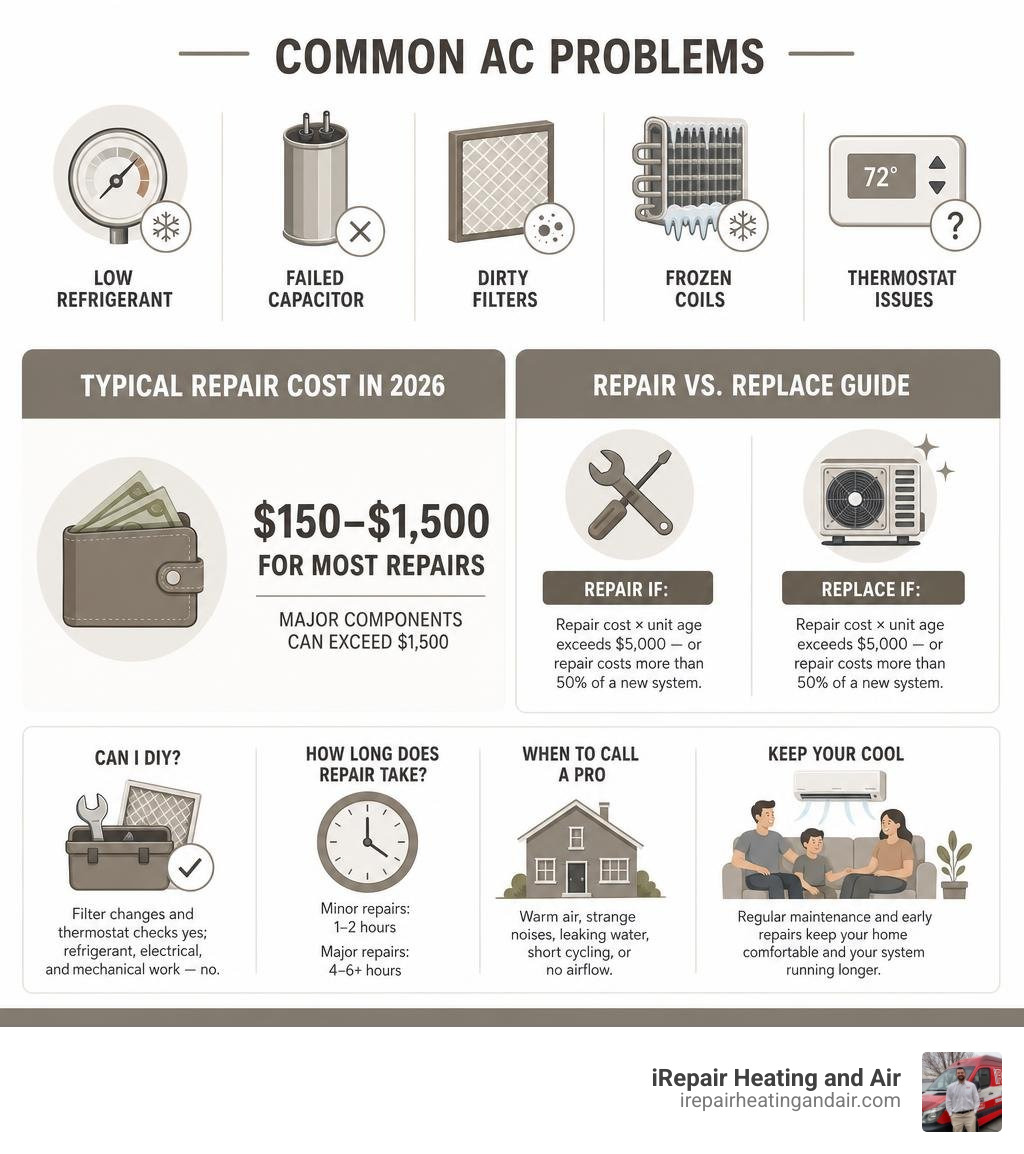
| Most common AC problems | Low refrigerant, failed capacitor, dirty filters, frozen coils, thermostat issues |
| Typical repair cost in 2026 | $150–$1,500 for most repairs; major components can exceed $1,500 |
| Repair vs. replace? | If repair cost × unit age exceeds $5,000 — or repair costs more than 50% of a new system — consider replacing |
| Can I DIY? | Filter changes and thermostat checks yes; refrigerant, electrical, and mechanical work — no |
| How long does repair take? | Minor repairs: 1–2 hours. Major repairs: 4–6+ hours |
| When to call a pro | Warm air, strange noises, leaking water, short cycling, or no airflow |
There's nothing quite like the dread of your AC giving out on a scorching Utah summer afternoon. Temperatures climb fast, the house heats up faster, and suddenly finding a reliable repair technician becomes the only thing on your mind.
The good news? Most AC problems are fixable — often the same day — when you know what to look for and who to call.
This guide walks you through everything: the warning signs, what repairs actually cost in 2026, what happens during a service visit, and how to keep your system running strong all season long.
At iRepair Heating & Air, air conditioning repair is something our team handles every day across Utah's Wasatch Front. Whether it's a quick capacitor swap or a more complex refrigerant leak, we've seen — and fixed — it all. Let's break down exactly what you need to know.
An air conditioner rarely fails without giving you a few warnings first. Recognizing these signs early can mean the difference between a simple, inexpensive fix and a complete system meltdown in the middle of a heatwave.
If you want to understand how your entire home comfort system ties together, reading our guide on Air and Heat Repair 101: Keeping Your Home Cozy All Year Round is a great place to start. Let's look at the most common red flags.
If you feel warm air blowing out of your supply vents, or if the airflow is so weak that it barely stirs the curtains, your system is crying out for help.
Weak airflow is often caused by a severely clogged air filter, a failing blower motor, or leaks in your ductwork. When the air blowing is actually warm, the culprit is often a failed compressor, a bad capacitor, or low refrigerant levels due to a leak.
If you are experiencing these issues in the Salt Lake area, you can find a detailed troubleshooting path with this More info on SLC air conditioning repair resource.
Your air conditioner should operate relatively quietly. While a gentle hum and the whoosh of air are normal, the following sounds are not:
Odors are another major warning sign. A musty, moldy smell indicates standing water in your drain pan or mold growing inside your ductwork. A sharp, burning metallic odor suggests overheating electrical components or a motor winding burning out. If you smell a sweet, chemical aroma, you might be dealing with a dangerous refrigerant leak.
Does your AC turn on, run for two minutes, shut off, and then turn back on again? This is known as short cycling. It places immense mechanical strain on your compressor and fan motors, rapidly accelerating wear and tear. Short cycling can be caused by an oversized system, frozen evaporator coils, or a malfunctioning thermostat.
Because the starting cycle of an AC draws the most electricity, short cycling will cause your utility bills to skyrocket. If you notice a sudden, unexplained spike in your monthly power bill, your AC is likely operating at a severe efficiency loss and requires professional diagnostic services.
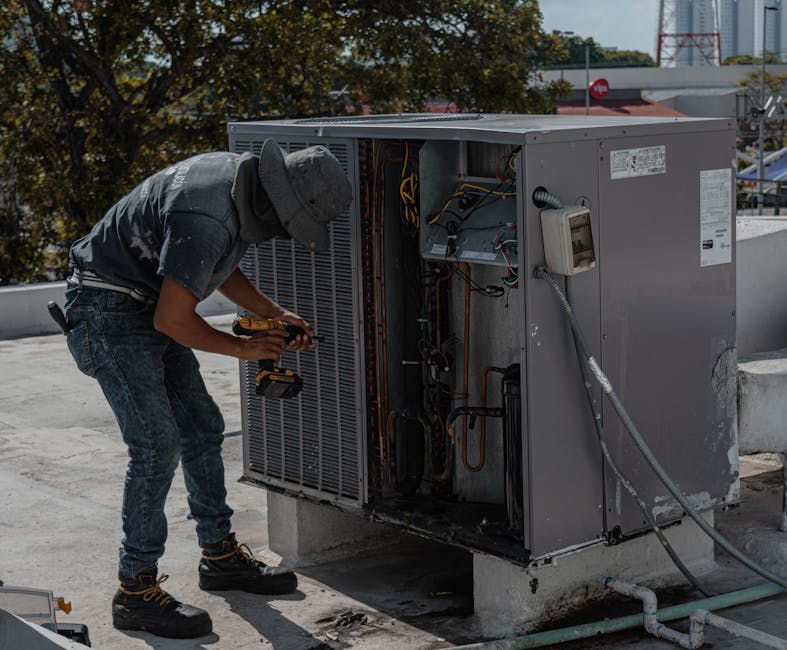
When your system acts up, the first question on your mind is naturally: How much is this going to cost me? In 2026, air conditioning repair costs in Utah typically range from $150 to $1,500 for standard residential systems.
While minor electrical fixes are relatively budget-friendly, replacing major components can easily push past the $1,500 mark.
Several key factors will dictate your final repair bill:
Here is a breakdown of what you can expect to pay for common AC repairs in 2026:
| AC Repair Type | Average Cost Range (2026) | Complexity Level |
|---|---|---|
| Thermostat Replacement | $150 – $450 | Low |
| Capacitor or Contactor Replacement | $150 – $350 | Low |
| Condensate Drain Line Clearing | $150 – $300 | Low |
| Blower Motor Replacement | $450 – $900 | Medium |
| Refrigerant Leak Repair & Recharge | $350 – $1,200 | Medium to High |
| Evaporator Coil Replacement | $1,200 – $2,500 | High |
| Compressor Replacement | $1,500 – $3,500 | High |
If you are facing a major repair bill on an older system, you have to decide whether to fix the unit or replace it entirely. To make an objective decision, we recommend using The $5,000 Rule.
Multiply the age of your air conditioning system by the estimated repair cost. If the result is over $5,000, your money is usually better spent on a replacement.
For example:
Additionally, if your system still uses R-22 refrigerant (which has been phased out), any refrigerant leak repair will be incredibly expensive. In these cases, upgrading to a modern, energy-efficient system is almost always the smarter financial move. For more information on making this transition, check out our Guide to professional AC replacement.
Inviting a service technician into your home shouldn't feel like a guessing game. Knowing what to expect during a professional air conditioning repair visit can help you prepare and ensure a smooth, stress-free experience.
When a technician from iRepair Heating and Air arrives at your home, they will follow a structured diagnostic process:
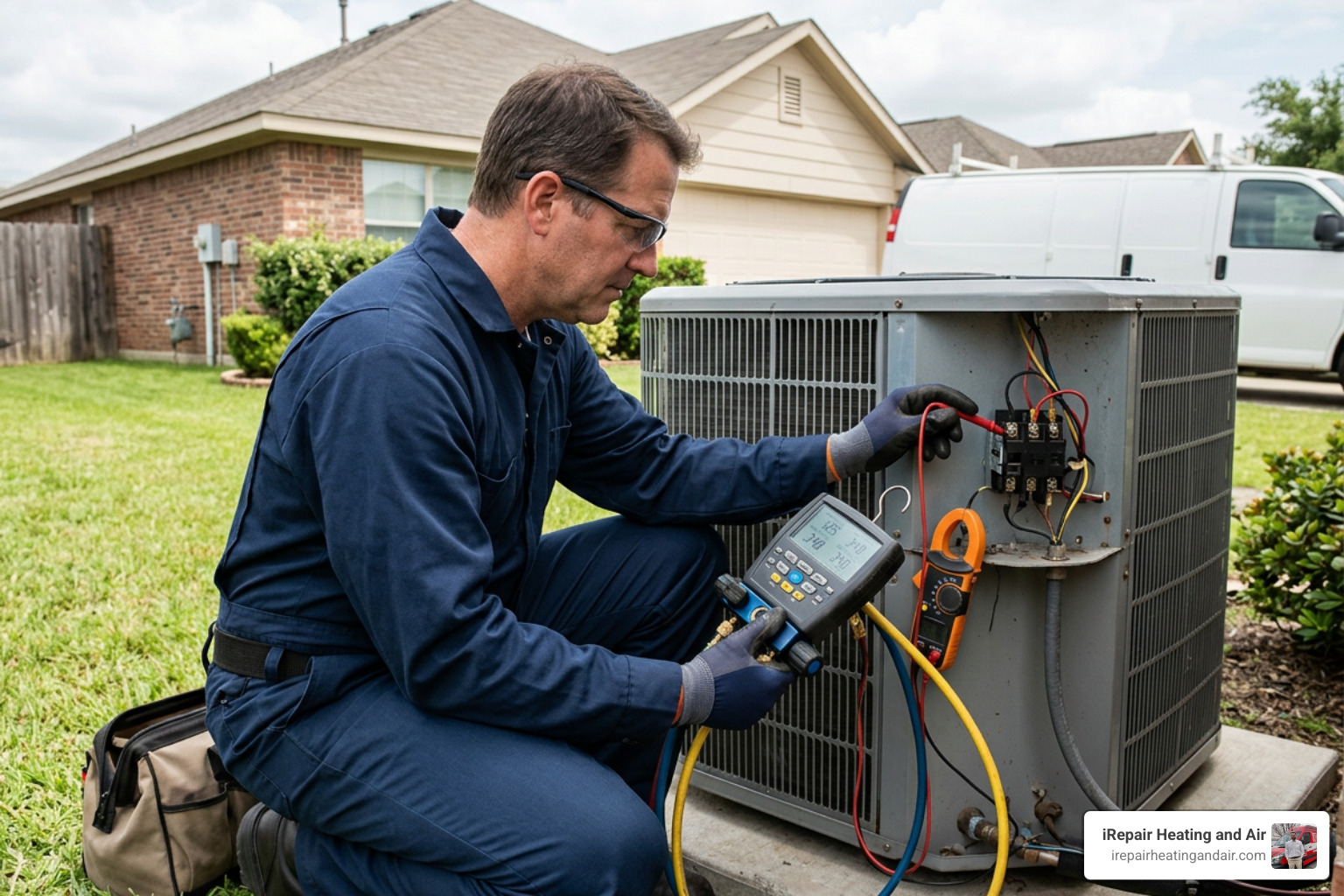
The duration of your repair depends on the complexity of the issue:
If parts are obsolete or require special ordering, there may be a delay of a few days, but a professional team will always keep you informed of the timeline.
The best way to handle an air conditioning repair is to avoid needing one in the first place. By taking a proactive approach to maintenance, you can extend your system's lifespan, lower your energy bills, and prevent emergency breakdowns during peak summer heat.
While complex mechanical and electrical work must be left to licensed professionals, there are several simple tasks you can handle yourself to keep your system happy:
For a complete checklist on setting your system up for success, read our guide on Tips for getting your AC ready for summer.
Just like your car needs regular oil changes, your cooling system requires professional tuning. Scheduling an annual maintenance visit before the summer heat hits is critical.
During a professional tune-up, technicians perform deep cleanings, test electrical connections, check refrigerant levels, and identify minor wear and tear before it turns into a costly breakdown. If you are looking for local options in Ogden, you can read about why this service is so beneficial in Chill Out: Why Regular Air Conditioning Service Ogden Is a Breeze.
If you live in the Salt Lake City area, you can schedule your annual tune-up with iRepair Heating & Air to keep your system running at peak performance. For more long-term care strategy, check out our guide on The Secret to a Long-Lasting AC Salt Lake City Maintenance Tips.
No. Under federal law, specifically EPA Section 608 refrigerant regulations, only certified technicians are permitted to purchase and handle chemical refrigerants. Furthermore, air conditioners are closed, hermetic systems.
If your refrigerant is low, it means there is a physical leak in the copper lines or coils. Simply adding more refrigerant without locating and repairing the leak is illegal, bad for the environment, and will ultimately ruin your compressor.
When looking for an HVAC provider along the Wasatch Front, keep these criteria in mind:
Before you panic, try these quick troubleshooting steps:
If these steps don't resolve the issue, you are likely dealing with an emergency. You can find immediate troubleshooting help and next steps in our SLC emergency HVAC repair guide. For a broader perspective on handling system issues, take a look at The Most Effective HVAC Repair Solution.
Your home's air conditioner is vital to your family's comfort and health during the hot summer months. Understanding the warning signs of a failing system, knowing what to expect during a repair visit, and staying on top of regular maintenance are the keys to keeping your home cool and your energy bills low.
At iRepair Heating & Air, we are proud to be a family-owned business serving our neighbors throughout Salt Lake City, Ogden, Provo, Park City, Sandy, and the entire Wasatch Front. We are dedicated to providing top-tier service to northern Utah homeowners, ensuring your cooling system operates efficiently when you need it most.
When you choose us, you get fair prices, transparent diagnostics, and rapid, same-day emergency service when you need it most. We treat every home with the care and respect it deserves.
Don't spend another minute sweating in a hot house. Contact us today to get your system running perfectly, or click here to Schedule your air conditioning repair roadmap today.