
Call 801-233-1564
Serving Salt Lake • Ogden • Provo • Park City
Licensed Contractor
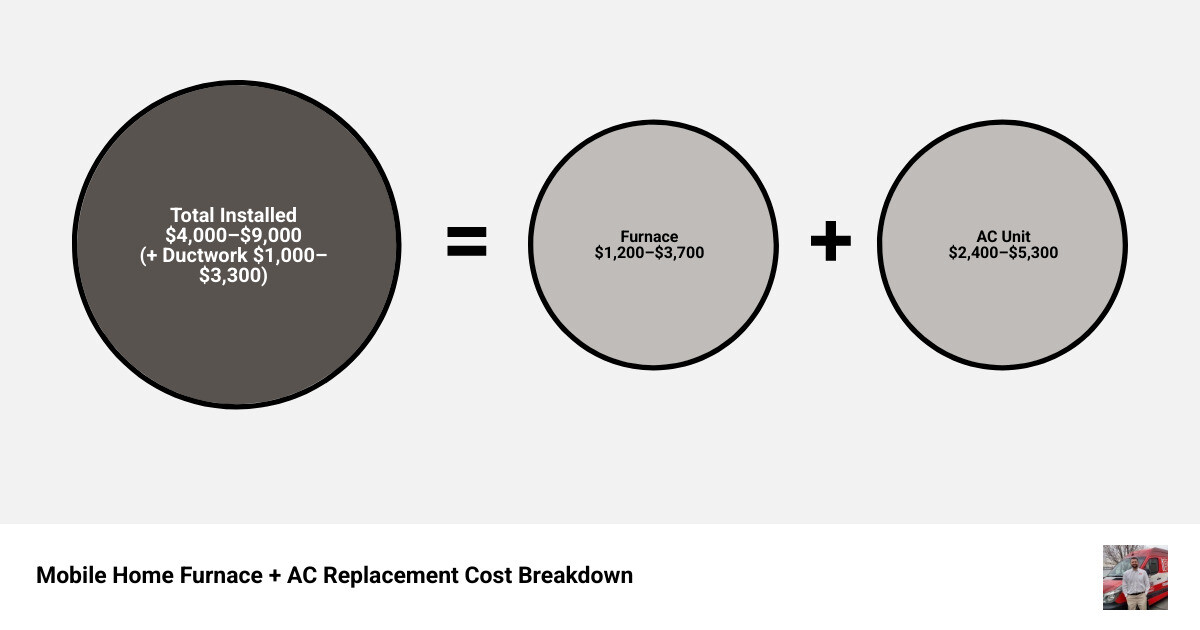
The mobile home furnace and AC replacement cost typically falls between $4,000 and $9,000 installed — but the number you actually pay depends on your system type, home size, and whether your ductwork needs work.
Here's a quick snapshot to answer the most common question right away:
| What You're Replacing | Typical Installed Cost |
|---|---|
| Furnace only (electric) | $1,200 – $2,500 |
| Furnace only (gas) | $1,700 – $3,700 |
| AC unit only | $2,400 – $5,300 |
| Full furnace + AC combo | $4,000 – $9,000 |
| Add ductwork replacement | +$1,000 – $3,300 |
These are 2026 installed prices — meaning equipment and labor included.
Most homeowners in Utah's Wasatch Front are surprised to learn that mobile home HVAC systems aren't just smaller versions of standard home units. They're specialized equipment built to meet HUD safety codes, fit into compact cabinets, and handle the unique airflow demands of manufactured home ductwork. That distinction matters a lot when it comes to cost — and to safety.
At iRepair Heating and Air, we've replaced countless mobile home HVAC systems across Salt Lake, Ogden, Provo, and everywhere in between, giving us a clear picture of real-world mobile home furnace and AC replacement costs in Utah's unique climate. Whether you're facing an emergency breakdown or planning ahead, this guide walks you through everything you need to budget confidently.
Similar topics to mobile home furnace and ac replacement cost:
When we look at the total bill for a new system, it’s rarely just about the metal box. The average investment for a full mobile home furnace and ac replacement cost ranges from $4,000 to $9,000, but that is a broad spectrum. Why the gap? It comes down to the "Equipment vs. Labor" split.
In mobile homes, labor usually accounts for about one-third of the total project cost, or roughly $1,000 to $3,000. The remaining two-thirds go toward the specialized HUD-approved equipment. For those living in Salt Lake City or the surrounding Wasatch Front, we often see prices lean toward the middle of this range unless there are significant ductwork issues.
If you are only replacing one half of the equation, the costs are more manageable. A furnace replacement alone generally costs between $1,200 and $3,700, while a new AC unit typically runs $2,400 to $5,300. However, there is a strong financial argument for doing both at once. Combining the two into a single project often saves you $500 to $1,000 in labor costs compared to doing them separately. You can learn more about these savings in our guide to combined HVAC replacement costs.
The type of system you choose is the biggest "lever" you can pull to change your final quote. In 2026, mobile homeowners have more options than ever:
For a deeper dive into these specific system prices, check out this comprehensive mobile home HVAC cost guide.
Fuel type is a major decision for Utahns, especially with our cold winters.
Electric Furnaces ($1,200 – $2,500 installed): These are the most affordable to install upfront. They don't require venting or gas lines, making the labor quick and easy. However, in cold climates like Park City or Ogden, they can be expensive to run month-to-month. They are essentially 100% efficient, but electricity costs more than natural gas.
Gas Furnaces ($1,700 – $3,700 installed): While the unit costs more, gas furnaces are the gold standard for comfort in the Wasatch Front. They use natural gas or propane (LP) and provide a "hotter" heat than electric models. When shopping, look at the AFUE (Annual Fuel Utilization Efficiency) rating. A 95% AFUE furnace is incredibly efficient but requires a PVC flue pipe, which might add to your installation cost.
Wondering if you're being quoted fairly? See our breakdown of what you should actually pay for a new furnace.
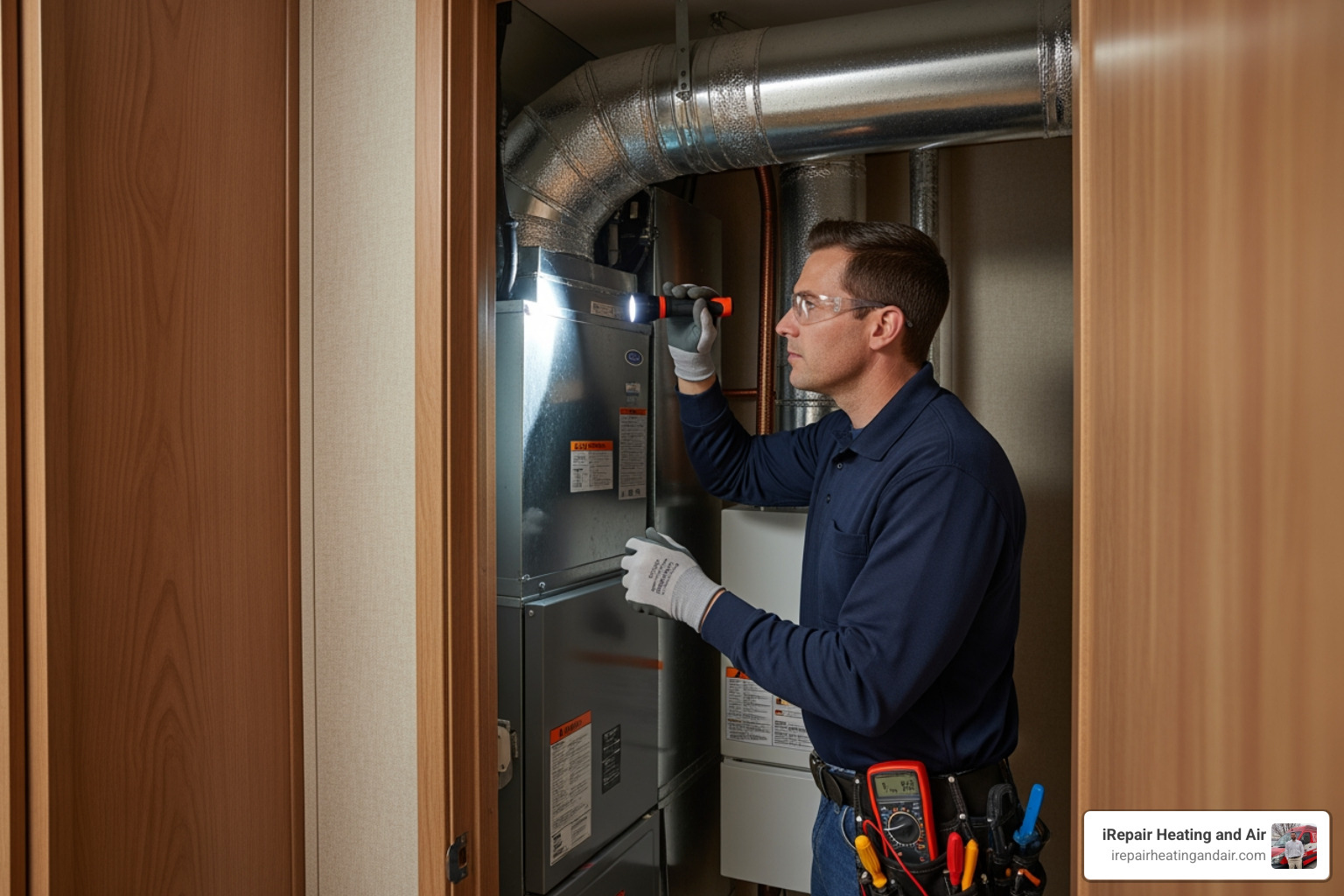
Every mobile home is a little different. We’ve seen single-wides that stay cool with a tiny unit and double-wides that need a heavy-duty system to combat the Utah summer sun. Here are the factors that will move your mobile home furnace and ac replacement cost up or down.
Size matters—but bigger isn't always better. If your system is too large, it will "short cycle," turning on and off constantly, which wears out the motor and leaves your home feeling humid. If it's too small, it will run forever and never reach your target temperature.
The general rule of thumb for mobile homes is 20 BTUs per square foot of living space.
In Utah’s climate zone, we often recommend slightly more robust heating capacity to ensure you stay warm when the snow starts falling in Provo or Salt Lake. You can find more details on 2026 forced air furnace costs here.
When we give a quote for a mobile home furnace and ac replacement cost, we always inspect the "vitals" of the home. Sometimes, the unit itself is fine, but the delivery system is failing.
Budgeting for these extras is key to avoiding "sticker shock." For more on the financial side, read the ultimate guide to financing your new system.
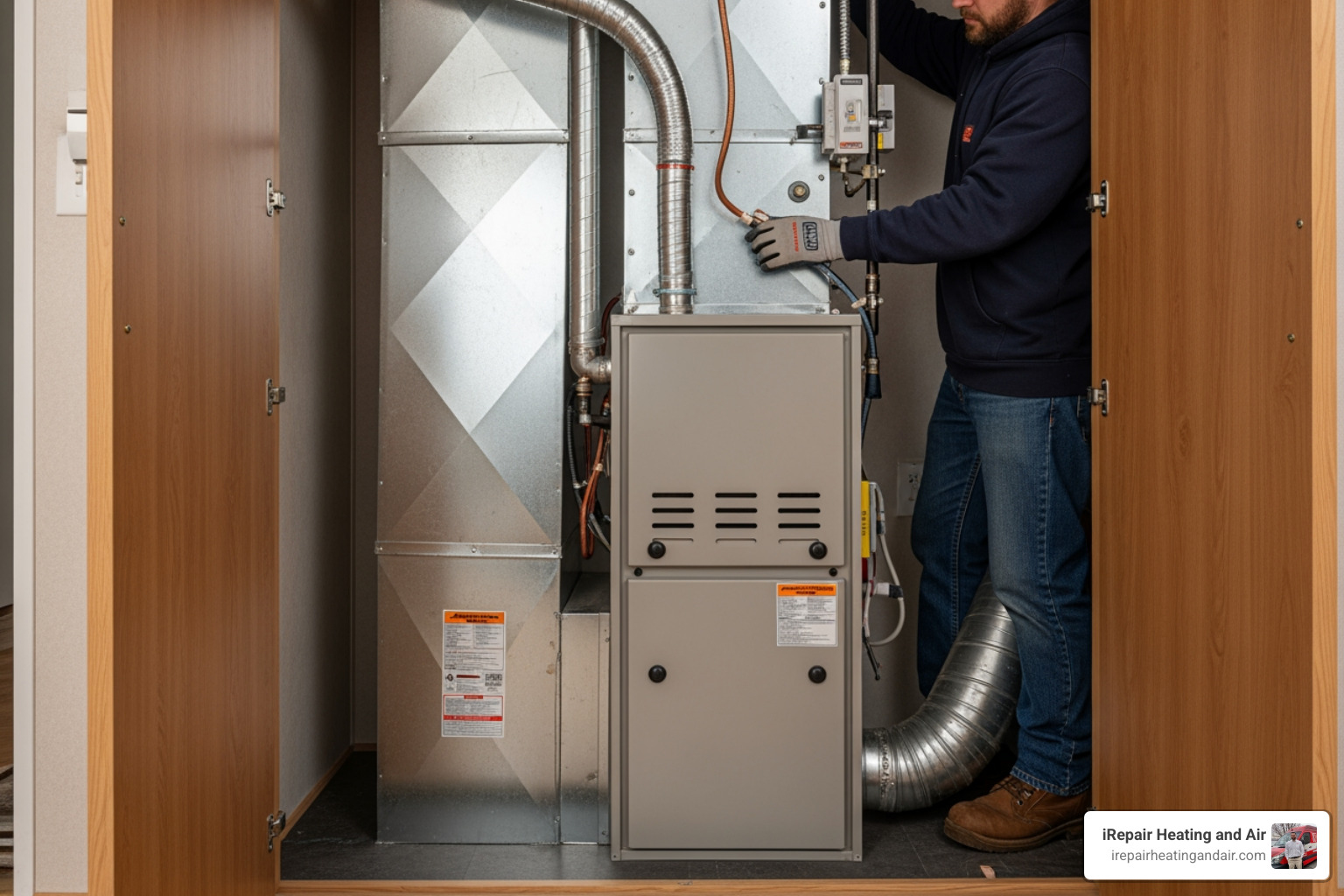
You might be tempted to buy a standard residential furnace from a big-box store and try to make it work. Don't do it. It’s not just a matter of fit; it’s a matter of safety and law.
Mobile home HVAC systems must be HUD-approved. Because mobile homes are built with smaller, more restrictive ductwork, they require a furnace with a higher "static pressure" capability. A standard home furnace will overheat and fail because it can't push air through those smaller vents effectively.
Furthermore, most mobile home furnaces are "downflow" units. In a standard house, the air often goes up into the attic. In a mobile home, the furnace sits in a closet and blows the air down into the floor ducts. These units also feature "sealed combustion," which means they pull air for the fire from outside the home, preventing dangerous carbon monoxide buildup in small living spaces.
For a look at how these technical requirements play out in real installations, see this 2025 mobile home HVAC guide.
We know that a mobile home furnace and ac replacement cost is a significant investment for any family. Here are a few "pro tips" we share with our customers in Sandy and Salt Lake to help lower the bill:
If you're looking for local options, we have a guide on finding the best HVAC financing close to home. You can also see how an upgrade improves your lifestyle in our Salt Lake City AC replacement guide.
In almost every case, yes. While the upfront mobile home furnace and ac replacement cost is higher, you save significantly on labor. More importantly, HVAC systems are designed to work as a matched set. If you put a brand-new AC condenser outside but leave a 20-year-old furnace blower inside, the system won't run efficiently, and you might even void your new unit's warranty.
For a standard replacement where the ductwork is in good shape, we can usually finish the job in 6 to 10 hours. If we need to replace the ductwork or modify the gas lines, it may take two days. We pride ourselves on same-day service to ensure you aren't left in the heat or cold for long.
No. Standard units are not HUD-approved for manufactured homes. Using one can lead to fire hazards, carbon monoxide leaks, and will almost certainly fail a home inspection if you ever try to sell your home. Always ensure your technician is installing a unit specifically labeled for mobile home use.
Navigating the mobile home furnace and ac replacement cost doesn't have to be stressful. By understanding the $4,000 to $9,000 average range and knowing the difference between electric and gas options, you can make a choice that keeps your family comfortable for the next 15 to 20 years.
At iRepair Heating and Air, we are your local Salt Lake City experts. As a family-owned business, we believe in fair prices and honest work across the Wasatch Front. Whether you are in Ogden, Provo, or Park City, we provide professional sizing to ensure you get the perfect unit for your home's unique layout.
Don't wait for a total system failure! Keep your current unit running longer with a professional furnace tune-up, or if you're ready for an upgrade, claim your new furnace coupon today and let us help you bring big comfort to your small home.