
Call 801-233-1564
Serving Salt Lake • Ogden • Provo • Park City
Licensed Contractor
Water softener installation companies can make the difference between a home that runs smoothly and one that's constantly fighting scale buildup, broken appliances, and poor water quality.
Looking for a quick answer? Here are the most important things to know:
Utah's water is notoriously hard. The Salt Lake Valley sits over mineral-rich geology that loads tap water with calcium and magnesium — the two main culprits behind scale buildup in pipes, water heaters, and appliances. Left untreated, hard water quietly shortens the life of everything it touches.
Most homeowners don't notice the damage until it's expensive. A water softener stops that process at the source.
At iRepair Heating and Air, we work daily with Utah homeowners dealing with the downstream effects of hard water — especially in tankless water heaters and plumbing systems — which gives us a front-row seat to what water softener installation companies get right (and wrong). That hands-on experience shapes everything we share in this guide.
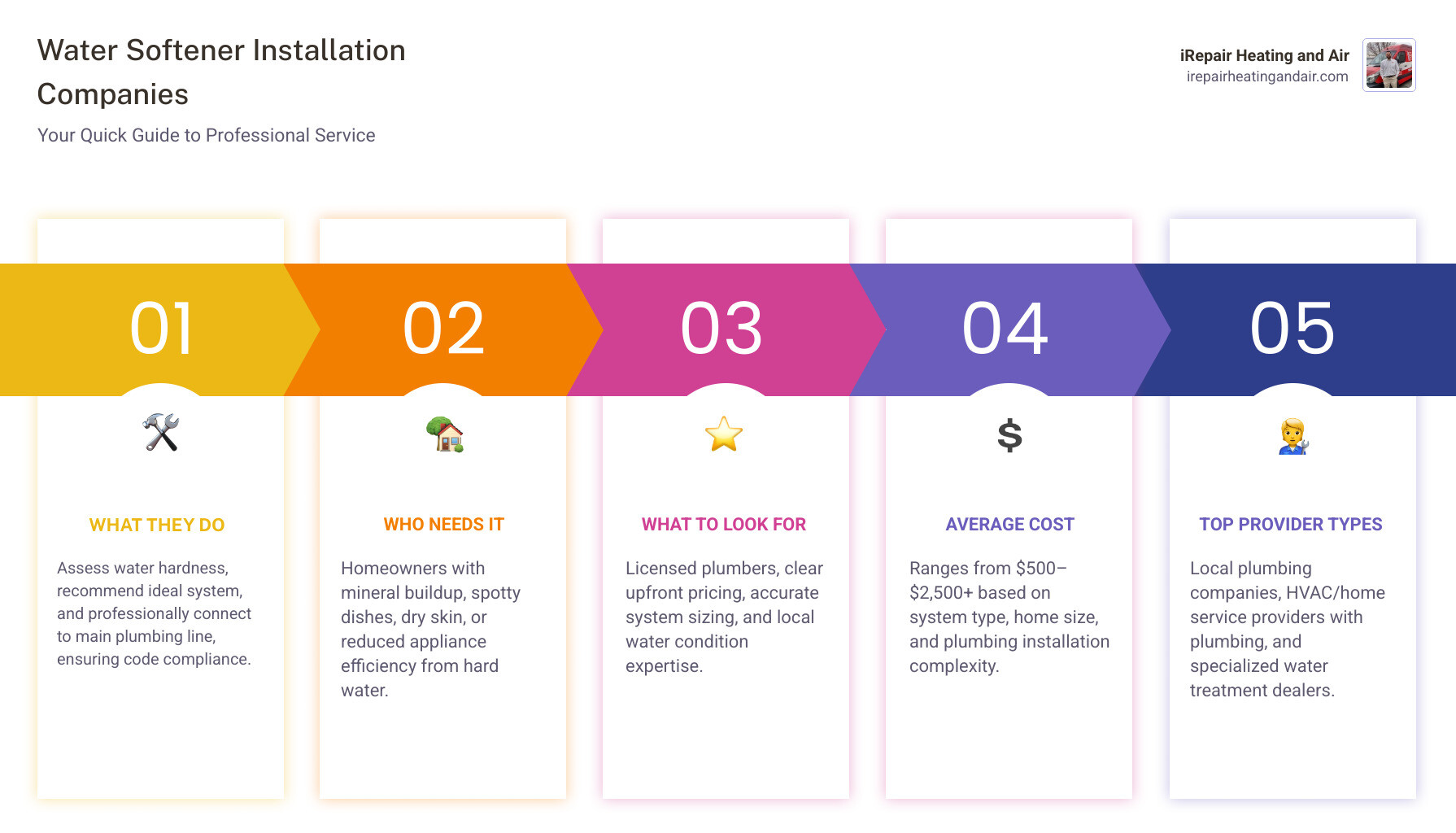
Water softener installation companies terms to learn:
Hard water isn't just a minor annoyance; it's a chemical reality that impacts your wallet and your home's infrastructure. In our service areas like Salt Lake City, Ogden, and Provo, the water is packed with calcium and magnesium. While these minerals aren't harmful to drink, they are devastating to your plumbing.
When hard water is heated, these minerals crystallize and form "scale." This rock-hard buildup acts like cholesterol in your home's "arteries" (the pipes). It narrows the opening through which water can flow, forcing your pump to work harder and reducing water pressure.
For those with high-efficiency systems, the stakes are even higher. We often discuss Softening the Blow: Managing Hard Water in Tankless Systems because tankless units are particularly sensitive to mineral deposits. Without soft water, a tankless heater can fail in a fraction of its expected lifespan.
How do you know if you need to call water softener installation companies? Look for these telltale signs:
Professional testing measures water hardness in "grains per gallon" (GPG). In Utah, it’s common to see numbers well into the "very hard" category (over 10.5 GPG). Understanding your specific GPG is the first step in our expert assessment at iRepair Heating and Air. We also check for secondary issues, such as ensuring your home is equipped with proper drainage. You can learn more about this in our guide on Everything You Need To Know About Water Softener Overflow Drains.
While DIY might seem tempting, professional water softener installation companies provide several critical advantages:
Selecting a water softener isn't a one-size-fits-all decision. Different technologies solve different problems.
| System Type | Technology | Best For | Pros | Cons |
|---|---|---|---|---|
| Salt-Based | Ion Exchange | Most Utah Homes | Completely removes minerals | Requires salt refills |
| Saltless | TAC (Crystallization) | Eco-conscious users | No salt or wastewater | Doesn't "soften" feel |
| Dual-Tank | Continuous Exchange | Large families | Soft water 24/7 | Larger footprint |
This is the gold standard for water softener installation companies. These systems use resin beads coated in sodium ions. As hard water passes through, the calcium and magnesium "stick" to the beads, and a tiny amount of sodium is released in exchange. Periodically, the system "regenerates" by flushing the beads with brine.
Technically "water conditioners," these systems don't remove minerals. Instead, they change the chemical structure of the minerals so they can't stick to surfaces. They are great for preventing scale but won't give you that slippery "soft water" feel in the shower.
Modern systems, like the Rheem Preferred Platinum or smart Whirlpool models, now offer Wi-Fi monitoring. These systems can alert you when salt is low or if there is a leak in the system. When we install these, we also ensure the water softener piping is optimized for these high-tech sensors.
One of the biggest mistakes homeowners make is buying a system based on price rather than "grain capacity." Grain capacity refers to how many grains of hardness the system can remove before it needs to regenerate.
We don't just guess. We look at:
In high-hardness areas along the Wasatch Front, we often recommend "upsizing" by one level. This ensures the system doesn't have to regenerate every single night, which saves you money on salt and extends the life of the resin beads.
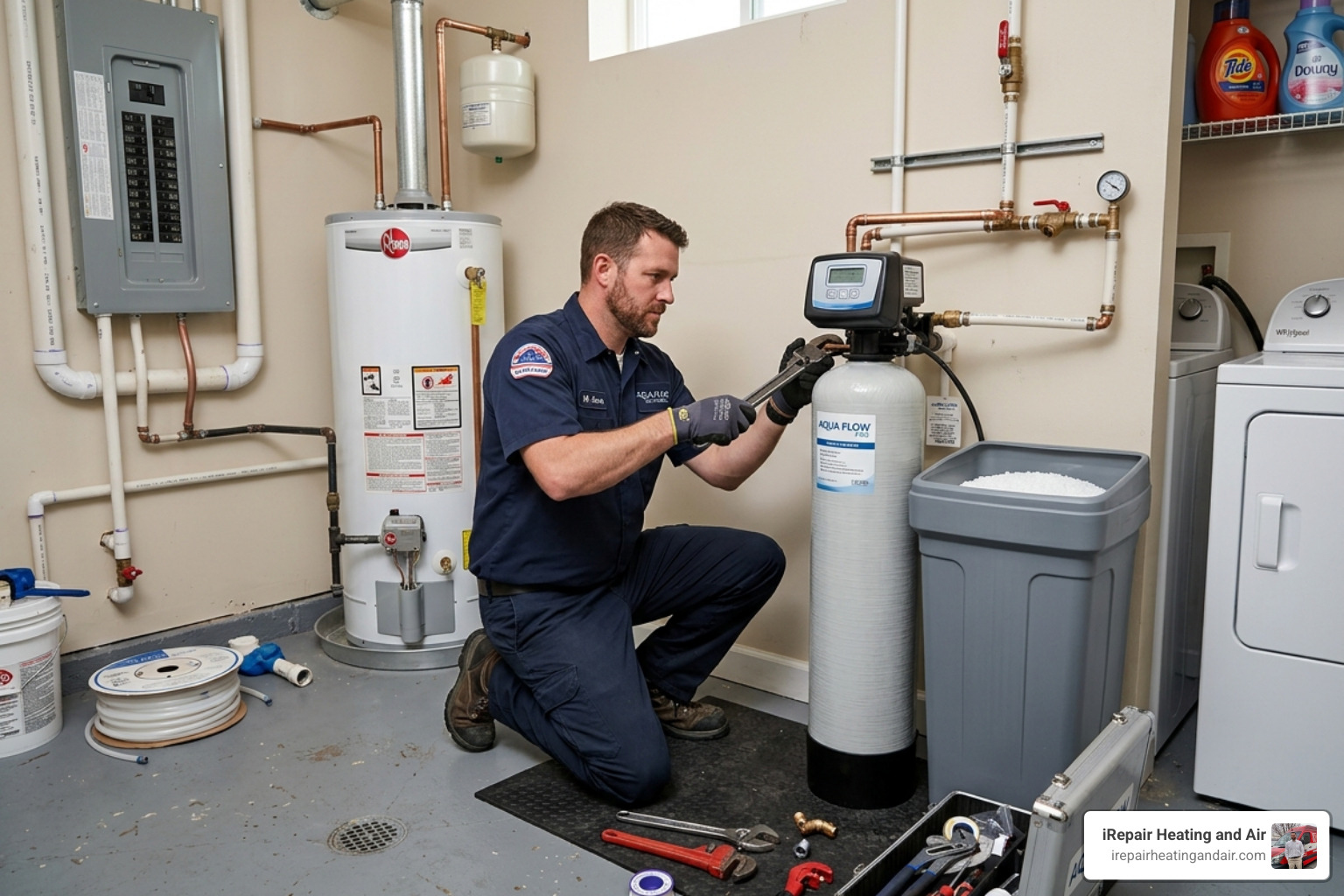
When you hire iRepair Heating and Air, we follow a rigorous process to ensure your system performs perfectly from day one.
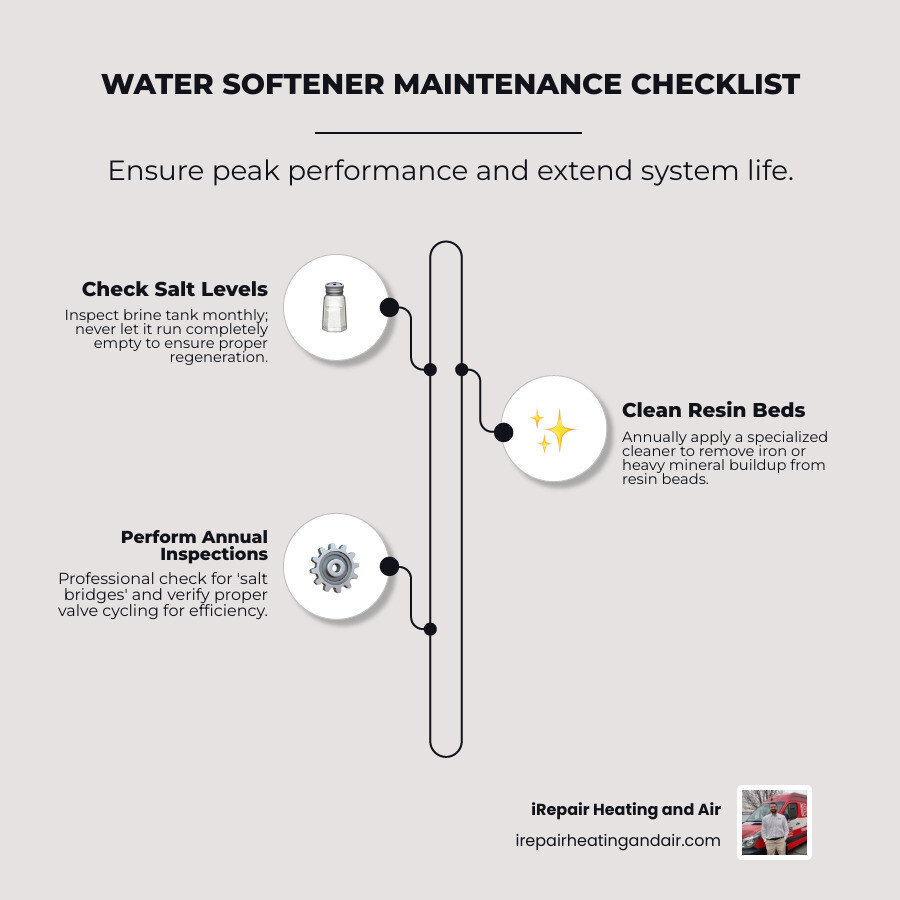
A water softener is not a "set it and forget it" appliance. To keep it running, you'll need:
To help with the initial cost, we often offer a Water Softener Coupon for our local customers in the Salt Lake-Ogden-Provo area.
Utah has unique environmental considerations. Because we live in a desert, water conservation is a priority.
Brine Discharge: When a softener regenerates, it flushes salty water down the drain. Some municipalities have strict rules about how much salt can enter the sewer system. We ensure your system is programmed for "demand regeneration" rather than "timer regeneration," which can reduce salt and water waste by up to 30%.
Plumbing Codes: In Salt Lake City and surrounding areas, a "P-trap" and an "air gap" are required for the drain line. This prevents sewer gases and bacteria from backing up into your water softener and, eventually, your drinking water.
While softeners are great for protecting pipes, they aren't filters. They don't remove chlorine, lead, or "forever chemicals" (PFAS). Many Utah homeowners choose to combine their softener with other solutions:
Integrated solutions from iRepair Heating and Air allow you to address both the "working water" (for cleaning and bathing) and the "drinking water" in one go.
Finding a reputable installer shouldn't be stressful. Here is what we recommend looking for:
At iRepair Heating and Air, we pride ourselves on being a local, family-owned choice for the Salt Lake, Utah, Ogden, Provo, and Park City areas. We believe in fair prices and honest service. If you're wondering how to vet other pros, check out our guide on How To Hire The Best Local Water Softener Installers.
What influences the price on your estimate?
For a standard replacement in a home that is already pre-plumbed, a professional installation usually takes 2 to 4 hours. If we are installing a system in a home that has never had one before, it can take a full day to run the necessary plumbing and drainage lines.
You can, but it's risky. Most "DIY" mistakes involve improper drainage (leading to floods) or connecting the hot and cold lines incorrectly. Furthermore, if you don't program the hardness grains correctly, the system won't actually soften your water. Hiring water softener installation companies ensures the job is done right and protects your warranty.
A softener uses ion exchange to physically remove calcium and magnesium from the water. A conditioner (often saltless) leaves the minerals in the water but treats them so they don't stick to pipes. Softeners provide the "slippery" feel and better soap lather; conditioners only protect against scale.
Living with hard water is a choice, but it's an expensive one. Between the shortened lifespan of your water heater and the constant scrubbing of mineral stains, the costs add up quickly. By choosing professional water softener installation companies, you're investing in the long-term health of your home's plumbing and your family's comfort.
Whether you are in Salt Lake City, Ogden, Provo, or Park City, iRepair Heating and Air is here to help. We offer same-day service, fair pricing, and the expert knowledge required to handle Utah's unique water conditions. Don't let hard water wear down your home.
Schedule your expert water softener installation today and feel the difference that truly soft water makes.
