

Call 801-233-1564
Serving Salt Lake • Ogden • Provo • Park City
Licensed Contractor

Hard water is a persistent nuisance for many homeowners along the Wasatch Front, leading to limescale buildup, dry skin, and shortened appliance lifespans. While the benefits of softened water are clear, finding the physical space for a bulky brine tank and resin cylinder can be a challenge. This often leads to the question: can we move the system outdoors?
Water softener installation outside offers a tempting space-saving solution, but it introduces a unique set of installation challenges. From extreme climate considerations to specialized plumbing needs, moving your water treatment system to the exterior of your home requires more than just a standard setup.
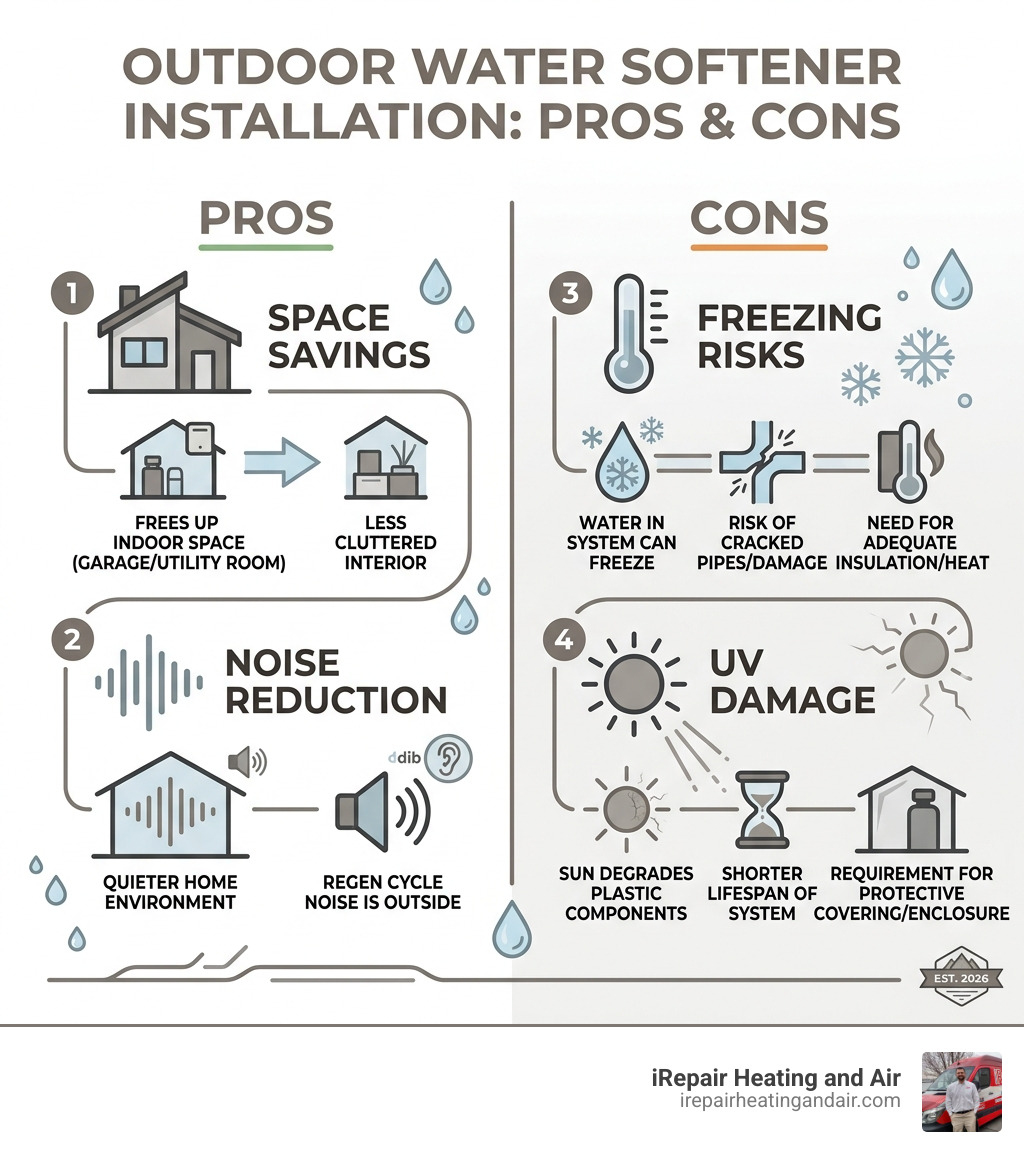
Deciding whether to place your system outdoors depends heavily on your local environment and the specific model of softener you choose. Most standard water softeners are engineered to operate within a specific temperature window—typically between 35°F and 100°F. If the temperature drops below freezing or climbs into triple digits, the system is at high risk for mechanical failure or structural damage.
In regions like Salt Lake City, Ogden, and Park City, our winters frequently dip well below that 35°F safety threshold. Conversely, summer temperatures can easily exceed 100°F. This doesn't mean outdoor installation is impossible, but it does mean the "standard" installation manual might not cover the level of protection you actually need. Before committing to an exterior spot, you should evaluate where to install a water softener based on your home’s specific layout and local weather patterns.
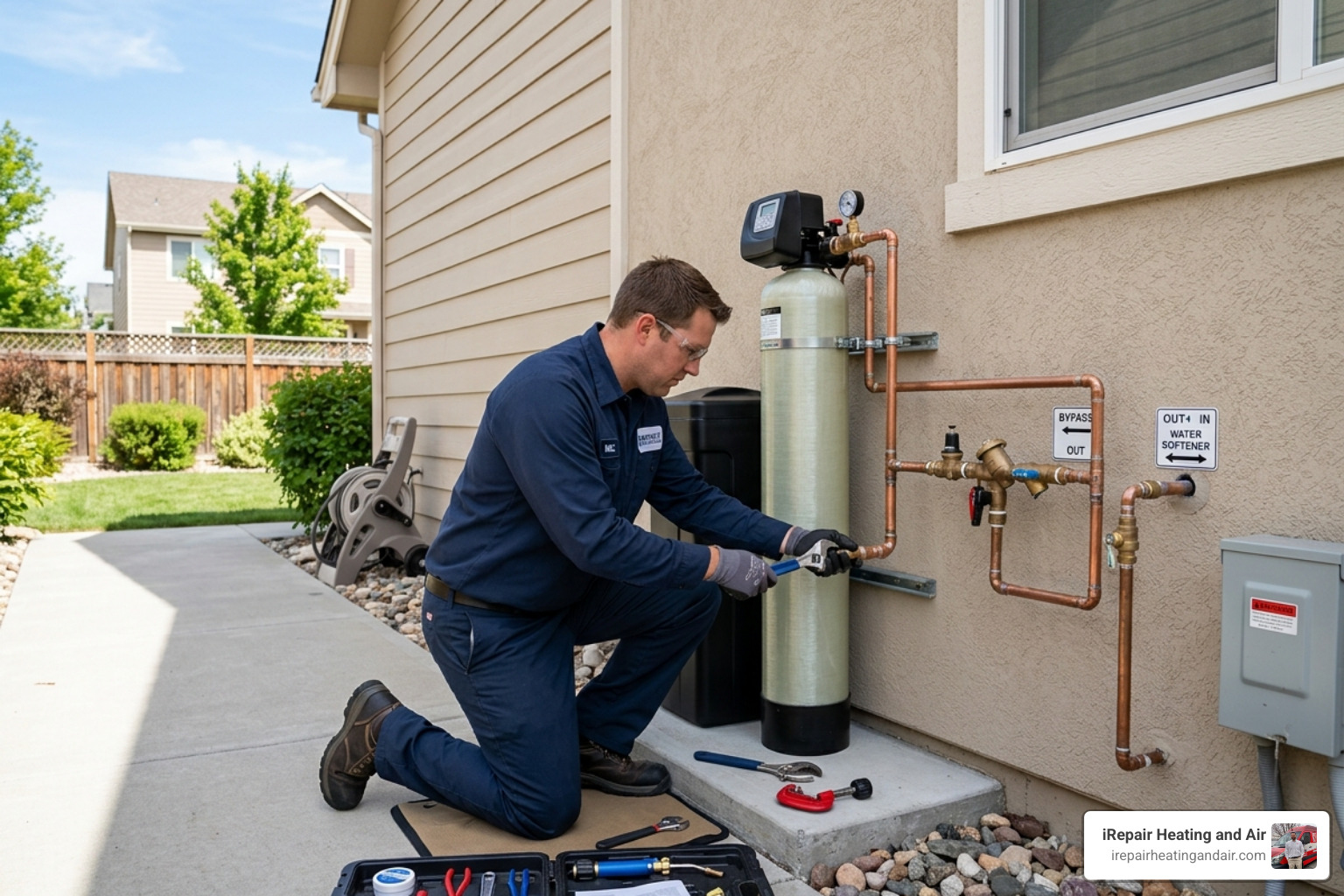
If you’ve weighed the risks and decided to move forward with an outdoor setup, there are several "non-negotiables" for the installation site. You can't just drop the tanks on the grass; you need a strategic location that meets plumbing, electrical, and structural needs.
First and foremost, the system must be near the main water entry point of the house. You want to soften the water before it hits your water heater or branches off to your kitchen and bathrooms. Additionally, you need to know everything you need to know about water softener overflow drains to ensure that during the regeneration cycle, the salty brine water has a safe place to go without flooding your foundation or killing your landscaping.
Every outdoor softener needs a dedicated power source. We always recommend a GFCI (Ground Fault Circuit Interrupter) outlet to prevent electrical shorts in damp conditions. From a plumbing perspective, a bypass valve is essential. This allows you to turn off the water to the softener for maintenance while still keeping water flowing to the rest of your house. We also suggest installing a sediment pre-filter before the softener to catch dirt or debris from the main line, which is especially common in older neighborhoods in Salt Lake City.
Protection is the difference between a system that lasts 15 years and one that fails in two. Without a "house" for your softener, the elements will win. In warmer climates like Florida, installers often bury the tanks 1.5 to 2 feet deep to use the earth's natural temperature to stay cool. In Utah, we have the opposite problem: we need to keep the heat in.
A simple "weather cover" provided by the manufacturer is rarely enough for a full Utah winter. We recommend a robust, insulated enclosure.
| Enclosure Material | Pros | Cons |
|---|---|---|
| Heavy-Duty Plastic | Rust-proof, lightweight, affordable | Can become brittle in extreme cold |
| Treated Wood | Great insulation, customizable look | Requires painting/staining, can rot |
| Insulated Metal | Extremely durable, high security | Expensive, prone to rust if not coated |
| Partial Burial | Uses ground heat, low profile | Harder to service, potential for shifting |
To truly protect the unit, ensure the enclosure has proper ventilation to prevent moisture buildup (which fries electronics) and is sealed against pests like mice or spiders who love the warmth of a control head.
While installers in central Florida or Lubbock, TX, might focus on shade and UV protection, our focus in the Salt Lake-Ogden-Provo area is freeze prevention. If you must install outside here, we recommend using heat tape with a built-in thermostat around the pipes and the valve head. Some homeowners even install a small, low-wattage light bulb or a tiny heater inside the enclosure to keep the ambient temperature above 40°F during a cold snap.
Outdoor systems require a more rigorous maintenance schedule. You should be checking the salt levels monthly and inspecting the enclosure for any signs of water intrusion or pest damage. Dust and pollen can clog the air vents on your control head, so a quick wipe-down every few months is a good idea.
When it comes to the "how-to" of the actual setup, following a guide on how to install a water softener is a great start, but outdoor-specific maintenance is its own beast. You aren't just maintaining a plumbing appliance; you're maintaining a small outdoor structure.
An unprotected outdoor unit will likely see its lifespan cut in half. UV rays weaken the fiberglass integrity of the resin tank, making it susceptible to "bursting" under pressure. High humidity can cause the circuit boards in the electronic timer to corrode. However, if the unit is housed in a dry, temperature-controlled cabinet, it can perform just as well as an indoor unit.
This is the "fine print" that catches many homeowners off guard. Most manufacturers, including big names like Kinetico, explicitly state that their warranties do not cover damage caused by freezing. If your tank cracks because it was installed outside without adequate heat, you’re on the hook for the full replacement cost. To maintain your coverage, you must strictly adhere to the operating parameters (usually staying above 35°F) and often have the system installed by a certified professional.
If you’re handy with a pipe cutter and have some experience with basic electrical work, a standard indoor installation is a manageable weekend project. However, water softener installation outside is an "advanced" project. It involves trenching, potentially rerouting your home's main water line, and ensuring your drainage meets local environmental regulations.
In many parts of the Greater Salt Lake Area, there are strict rules about where you can discharge salt brine. Dumping it into a storm drain that leads to local waterways is often illegal. A professional plumber knows these codes and can ensure your system is compliant. Plus, we often have a water softener coupon available to help make the professional route more affordable.
Not necessarily, but it changes what is covered. Most warranties remain valid as long as the system operates within the manufacturer’s specified temperature range (35°F–100°F). If the unit is damaged by freezing or "melted" by extreme heat because it wasn't protected, that damage is almost never covered.
We generally advise against it in the Salt Lake-Ogden-Provo area unless there is absolutely no other option. If you must, you need a heavily insulated, heated enclosure and heat tape on all exposed pipes. A power outage during a blizzard could still result in a frozen, ruined system.
The best way is a physical barrier. An opaque enclosure (wood, plastic, or metal) that blocks 100% of direct sunlight is essential. If an enclosure isn't possible, some manufacturers offer UV-resistant "jackets" or covers, but these are less effective than a full cabinet.
At iRepair Heating and Air, we want you to have the best water quality possible without the headache of a broken system. While water softener installation outside can be a great space-saver for homes in Sandy or Tooele, it requires a level of planning and protection that goes far beyond a standard indoor setup.
Whether you need a complex outdoor installation, a simple indoor replacement, or emergency repairs on a system that’s seen better days, our family-owned team is here to help. We offer same-day emergency service and fair prices across the entire Wasatch Front. If you're ready to tackle your hard water problems, check out our plumbing services or give us a call today. We’ll make sure your water softener is installed safely, efficiently, and ready to handle whatever the Utah weather throws at it!