
Call 801-233-1564
Serving Salt Lake • Ogden • Provo • Park City
Licensed Contractor
A blocked drain line is one of the most frustrating problems a homeowner can face — and one of the most common. Before diving into the full guide, here's a quick answer if you need it fast:
How to clear a blocked drain line (quickest path):
Standing in a shower filling up with dirty water, or watching your kitchen sink refuse to drain — these aren't just annoying. They're warning signs. Left unchecked, a blocked drain line can cause water damage, mold growth, and exposure to harmful sewage bacteria.
The problem can start small. A little grease here, some hair there, a "flushable" wipe or two — and before long, your entire plumbing system is struggling. And if the blockage reaches your main sewer line, every drain in your home stops working at once.
This guide walks you through everything: how to spot the problem, fix it yourself when you can, and know when to call in a pro.
I'm Luke Jordan, owner of iRepair Heating and Air, and over the years serving Utah homeowners from Ogden to Provo, I've seen how a neglected blocked drain line — whether in a plumbing system or an HVAC condensate line — can quickly turn into a costly emergency. Understanding the warning signs early is the fastest way to protect your home and your wallet.
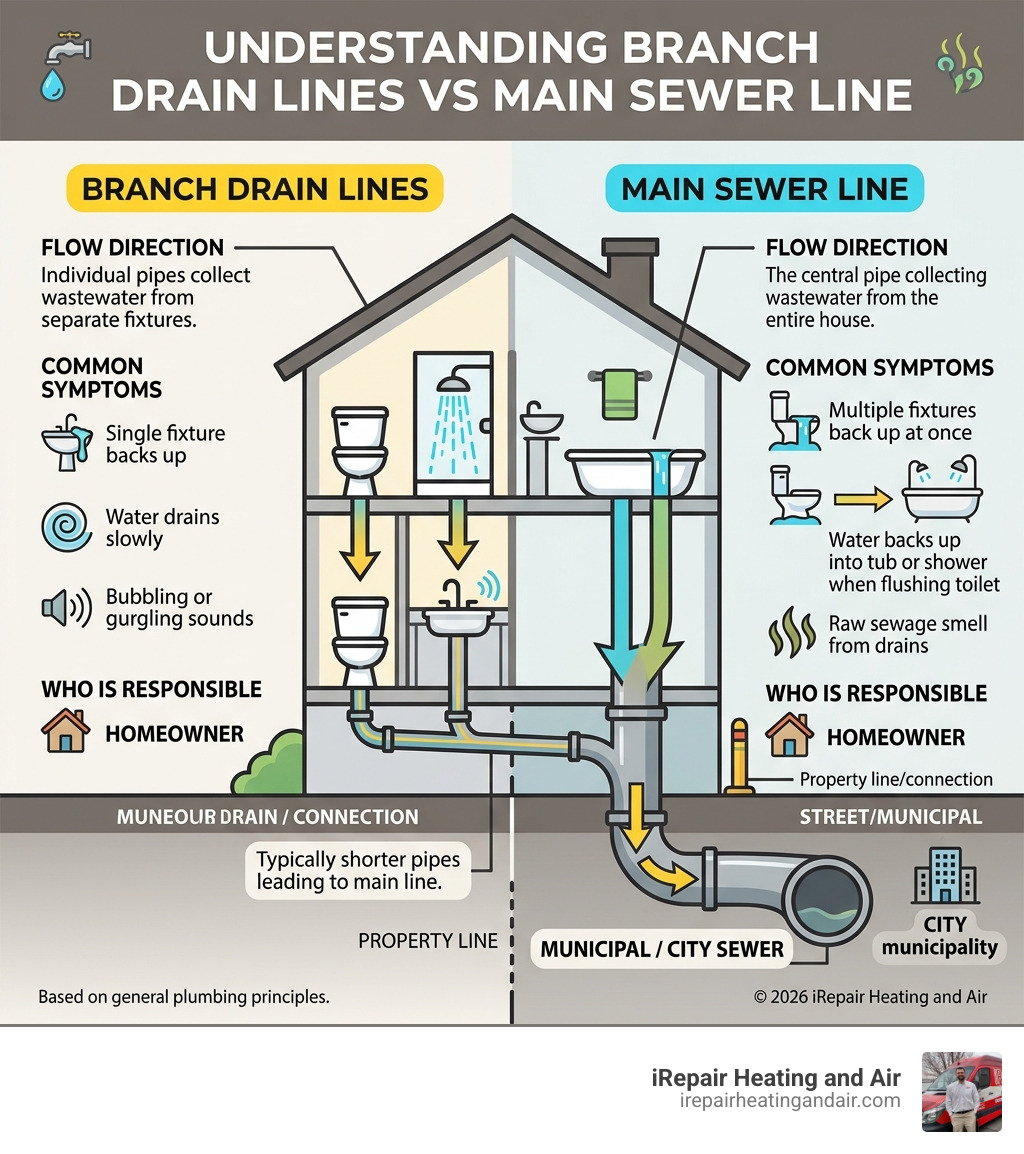
Detecting a blocked drain line early can be the difference between a five-minute DIY fix and a week-long basement renovation. Most clogs don't happen overnight; they "grow" over time as debris catches on pipe walls.
Common symptoms include:
To help you diagnose the severity, we’ve put together this comparison:
| Symptom | Likely Fixture Clog | Likely Main Line Blockage |
|---|---|---|
| Number of Drains Affected | Only one (e.g., just the kitchen sink) | Multiple fixtures across the house |
| Reaction to Flushing | No effect on other drains | Water backs up into tubs or floor drains |
| Odors | Localized to one sink | Widespread sewage smell |
| Washing Machine Use | Drains normally | Causes toilets to overflow or gurgle |
For a deeper dive into these symptoms, check out this guide on Main Sewer Line Clogs: Signs, Causes, and Professional Response.
Think of your plumbing like a tree. The "branches" are the small pipes under your sinks and tubs. The "trunk" is the main sewer line. If a branch is clogged, only that leaf wilts. If the trunk is blocked, the whole tree suffers.
A main blocked drain line is a plumbing emergency. You’ll know you have one if you see sewage backing up into the lowest drains in your home, such as basement floor drains or shower stalls. Another indicator is the sewer cleanout—a pipe with a threaded cap usually located outside your foundation. If you open that cap and see standing water or sewage, the blockage is definitely in the main lateral.
Most homeowners forget that their air conditioner also has a drain line. As your AC removes humidity from the air, that water (condensate) needs somewhere to go. If this small PVC pipe becomes a blocked drain line, you might notice:
Why do drains fail? Usually, it’s a combination of physics and bad habits. In our experience across the Wasatch Front, the culprits fall into a few specific categories.
Fats, Oils, and Grease (FOG) This is the "Big Three" of kitchen plumbing disasters. When grease is hot, it’s liquid. As soon as it hits your cold pipes, it solidifies into a waxy substance that acts like glue for every other piece of debris passing by. Even if you run hot water while pouring grease, it eventually cools down deeper in the line.
The "Flushable" Wipe Myth Despite what the packaging says, wipes are not flushable. Unlike toilet paper, which is designed to dissolve in seconds, wipes are made of synthetic fibers that stay intact for years. They are the primary cause of "fatbergs" in municipal sewer systems.
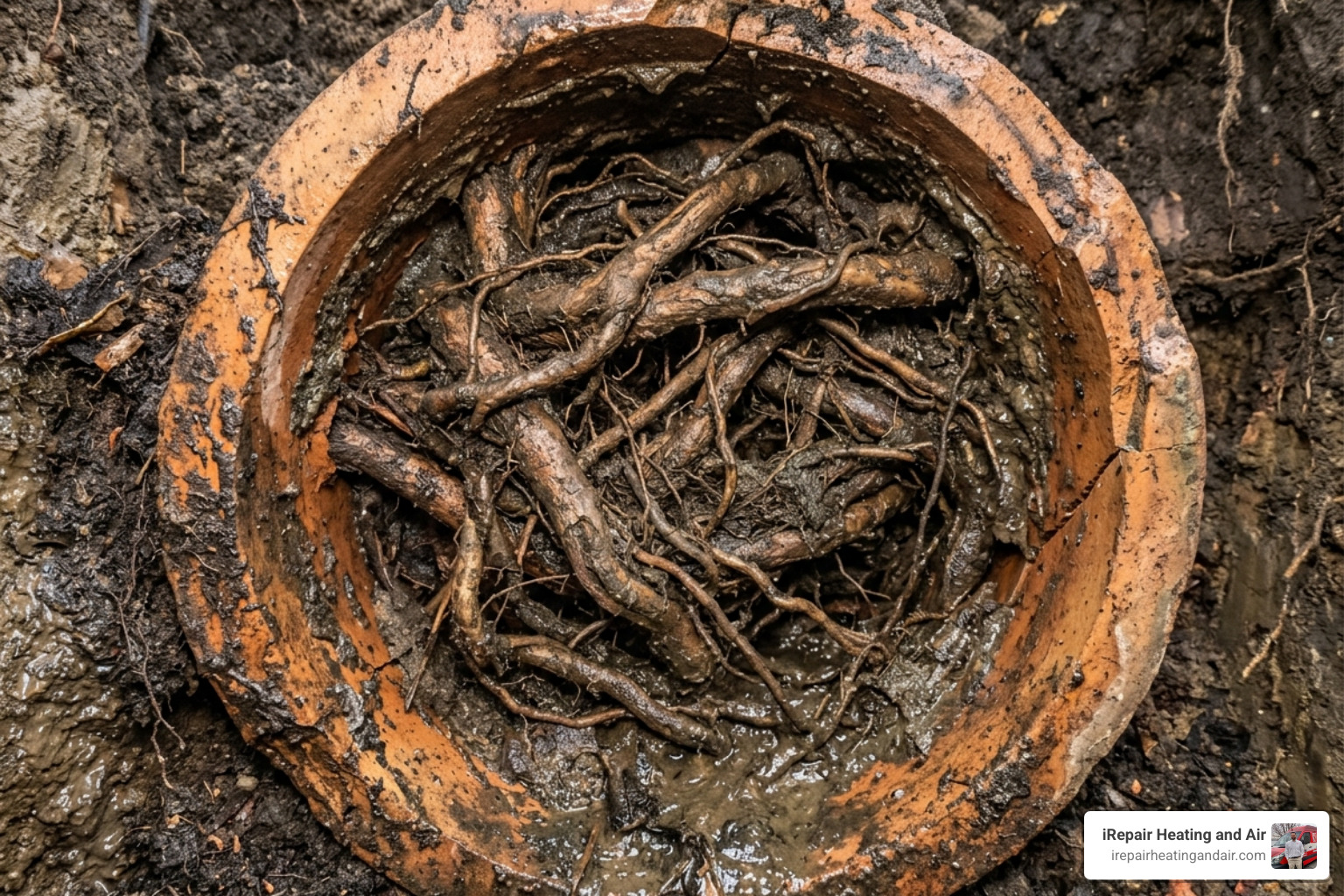
Tree Root Intrusion In older neighborhoods in Salt Lake City and Ogden, many homes still have clay or cast iron sewer pipes. Over time, these pipes develop tiny cracks. Tree roots can sense the moisture inside and will grow into the pipe to reach the water. Once inside, they expand, eventually creating a total blocked drain line.
In the kitchen, food particles (especially starchy things like pasta and potato peels) can jam a garbage disposal or settle in the P-trap. In the bathroom, the combination of hair and soap scum creates a waterproof "mat" that is incredibly difficult to move with water pressure alone.
For those looking for a quick fix, we've reviewed the Top 5 Drain Cleaners to Save Your Sewer Line, though we always recommend caution with harsh chemicals.
Sometimes, it’s not your fault.
Before you panic and call for emergency service, there is a "systematic escalation" you can try. We recommend starting with the gentlest method and working your way up.
This works best for kitchen clogs caused by grease or soap. Boil a full kettle of water and pour it directly into the drain in two or three stages. The heat can melt solidified grease and allow it to wash away. Note: Do not use this method if you have PVC pipes, as the boiling water can soften the joints.
This isn't just for science fair volcanoes!
For a plunger to work, you need a tight seal.
If the clog is localized to one sink, it’s likely in the P-trap—the U-shaped pipe underneath.
For more detailed steps on handling larger lines, see Clearing a Blocked Main Drain Line: Tips for Fixing.
Your AC drain line (condensate line) requires a different approach. Since these lines are usually only 3/4 of an inch wide, they clog easily with algae and "slime."
If you’re worried about your HVAC system's health, don't forget to use our Drain Clean Coupon for professional assistance.
Sometimes, the DIY route just doesn't cut it. If you've tried plunging and snaking to no avail, or if sewage is appearing in your bathtub, it’s time for the heavy hitters.
While every job is different, here are some general industry price ranges to help you budget:
To learn more about why these services are vital for local residents, read Why Your Pipes Need a Park City Drain Cleaning Service.
The best way to deal with a clog is to never have one in the first place.
We generally advise against it. Most consumer-grade chemical cleaners are designed for small clogs near the drain opening. By the time the chemical reaches a main line clog (which could be 50 feet away), it is too diluted to be effective. Furthermore, these chemicals generate heat that can soften PVC pipes or corrode older metal lines. If you have a septic system, these chemicals can kill the beneficial bacteria needed to break down waste.
In most Utah homes, the cleanout is a 3- or 4-inch pipe with a threaded cap. Look for it:
A washing machine discharges a massive amount of water—typically 15 to 20 gallons—very quickly. If your main sewer line has a "partial occlusion" (a clog that hasn't fully closed the pipe yet), it can't handle that sudden volume. The water takes the path of least resistance, which is usually the nearest floor drain or a low-lying sink. This is a classic sign of a main blocked drain line that needs professional attention.
A blocked drain line is more than a nuisance; it’s a threat to your home’s health and safety. Whether it’s a simple hair clog in the shower or a complex root intrusion in your main sewer line, acting quickly is the key to minimizing damage and cost.
At iRepair Heating and Air, we take pride in being Utah’s trusted partner for all things plumbing and HVAC. From the streets of Salt Lake City to the hills of Park City, our family-owned team is ready to provide same-day emergency service and fair, transparent pricing. We don’t just clear pipes; we provide peace of mind.
Don't let a slow drain turn into a flooded basement. Schedule your professional drain cleaning today and let us get your home flowing smoothly again.