
Call 801-233-1564
Serving Salt Lake • Ogden • Provo • Park City
Licensed Contractor
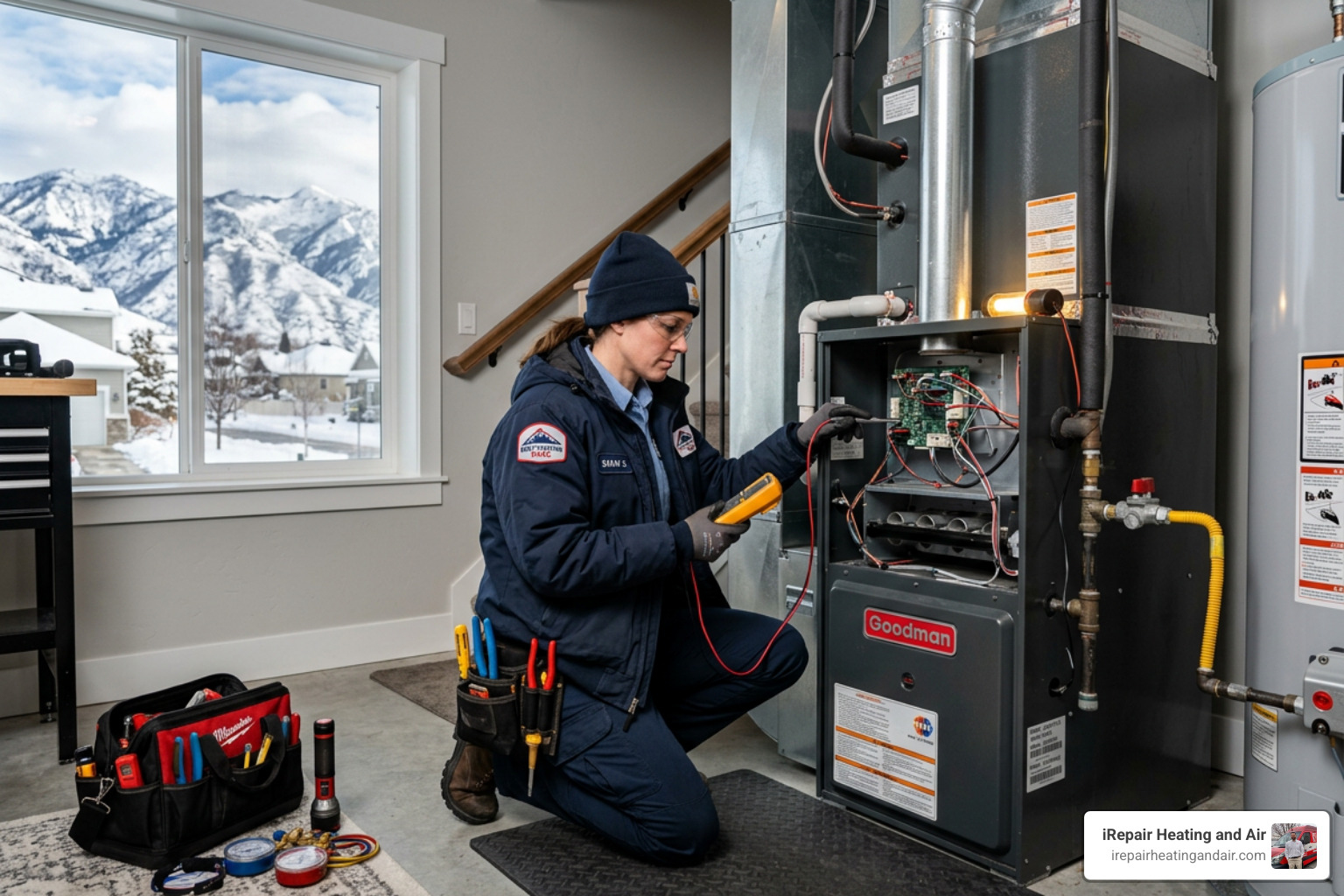
Furnace repair in Salt Lake City is something no homeowner wants to deal with — especially when temperatures on the Wasatch Front drop well below freezing overnight.
If your furnace has stopped working, here's what to check first:
If you smell gas, hear loud banging, or your carbon monoxide detector goes off, leave the house immediately and call 911.
Utah winters are no joke. Salt Lake City regularly sees sub-freezing nights, and a furnace that's struggling — or completely dead — can go from uncomfortable to dangerous in hours. Most furnaces last 15 to 20 years, but even a well-maintained system can break down when you need it most.
The good news? Most furnace problems are fixable fast, often on the same day, when you have the right team on call.
I'm Luke Jordan, owner of iRepair Heating and Air, and I've spent years providing furnace repair in Salt Lake City and across the Wasatch Front — from Ogden to Provo and everywhere in between. In this guide, I'll walk you through everything you need to know to get your heat back on quickly and keep it running all winter long.
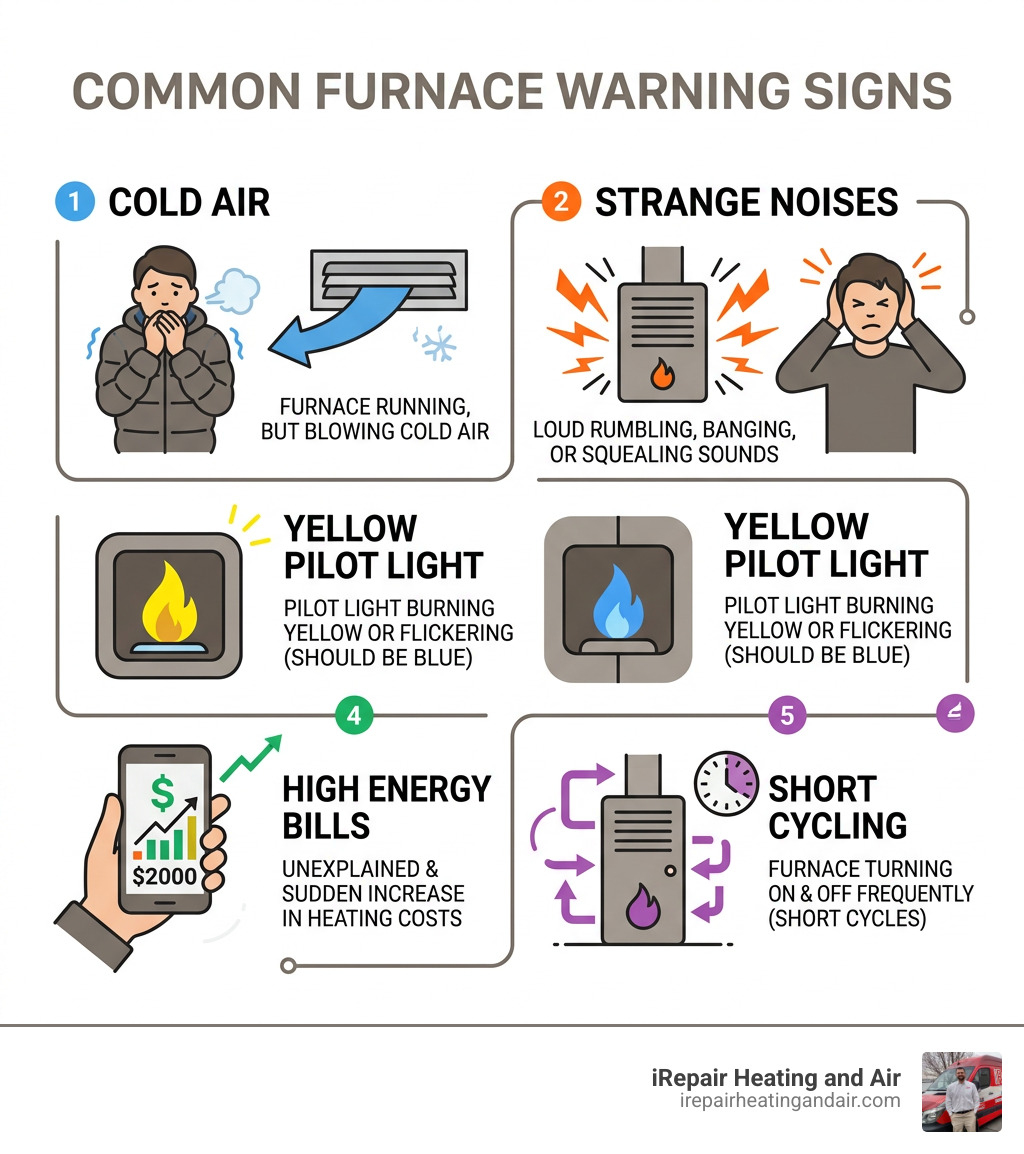
Recognizing the early warning signs of a failing heater can be the difference between a quick fix and a total system replacement. In our experience serving the Salt Lake Valley, furnaces rarely just "die" without warning; they usually send out a few SOS signals first.
One of the most obvious signs is strange noises. If your furnace sounds like it’s hosting a construction site, pay attention. Banging or popping sounds often occur when burners are dirty, causing a delay in ignition that results in a small "mini-explosion" of gas. Whistling or squealing can indicate a slipping fan belt or a blower motor that is desperately in need of lubrication.
Another major red flag is the color of your pilot light. A healthy furnace flame should be a crisp, steady blue. If you see a flickering yellow or orange flame, it’s a sign that the gas isn't burning completely. This is a serious safety concern as it can indicate the production of carbon monoxide.
Don't ignore unpleasant odors, either. While a dusty smell is common the first time you turn the heat on in October, a metallic "burning" smell or the scent of rotten eggs (which indicates a gas leak) requires immediate professional attention. For more tips on keeping your system healthy, check out our guide on Caring for Your Furnace.
It is incredibly frustrating when you feel a draft and realize your vents are blowing chilly air. Often, this is caused by something as simple as a thermostat setting. Ensure your fan is set to "Auto" rather than "On." When set to "On," the fan blows continuously even when the furnace isn't heating the air.
If the air is cold and the furnace is short cycling (turning on and off rapidly), the culprit is frequently a clogged air filter. When the filter is caked in dust, the furnace overheats because it can't "breathe," and a safety switch shuts it down to prevent a fire. Other causes include ignition failure or a faulty flame sensor. To prevent these mid-winter headaches, learn How Do I Get My Furnace Ready for Winter before the first snow hits.
Before you pick up the phone, there are a few "DIY" checks that might save you a service fee:
Utah’s climate is unique, and it puts a massive strain on HVAC systems. We deal with "The Inversion," heavy lake-effect snow, and temperatures that can swing 40 degrees in a single day. These fluctuations cause metal components to expand and contract rapidly, leading to premature wear and tear.
One common issue we see along the Wasatch Front involves high-efficiency condensation. High-efficiency furnaces (90% AFUE or higher) produce water as a byproduct of the heating process. In sub-freezing temperatures, if the drainage pipes aren't insulated or sloped correctly, that water can freeze, backing up into the furnace and causing it to shut down.
Drainage clogs from dust or even small pests can also lead to leaks around the base of your unit. Furthermore, frozen pipes aren't just a plumbing issue; if a pipe bursts near your HVAC system, the resulting moisture can ruin electrical components. This is especially dangerous for our older neighbors, which is why we emphasize Seniors Staying Safely Warm during peak winter months.
When a blizzard hits the Salt Lake area, your furnace is working at maximum capacity. This is when electrical malfunctions or fuel leaks are most likely to occur. Because a broken furnace in 10-degree weather is a true emergency, we provide 24/7 emergency services to ensure no family is left in the cold.
Safety is our top priority. A malfunctioning furnace can leak carbon monoxide, an odorless, colorless gas that is deadly. We always recommend that Salt Lake City homeowners install CO detectors on every floor and near sleeping areas. If your detector ever sounds, don't wait — get out and call us immediately.
We know that an unexpected furnace breakdown can be a stress on the family budget. That’s why we believe in upfront pricing. You should know exactly what the job costs before we ever turn a wrench. We use flat rates rather than hourly billing, so you aren't penalized if a "weird" problem takes a little longer to diagnose.
The cost of furnace repair in Salt Lake City generally depends on three factors:
To help keep costs down, we offer various Heating and Air Coupons and even A New Furnace Coupon if your system is beyond repair. We also offer flexible financing options to make sure you can stay warm now and pay over time.
The average lifespan of a furnace in Utah is approximately 16 to 18 years, though a well-maintained unit can push past the 20-year mark. If your furnace is over 15 years old and you are facing a repair that costs more than 50% of the price of a new unit, it’s usually time to consider a replacement.
Older furnaces lose their energy efficiency over time. While a new unit might be 96% efficient, an old one might only be 70% efficient, meaning 30 cents of every dollar you spend on gas is going right up the chimney. If you're unsure where your system stands, the Energy Star Replacement Guide is a great resource.
The best way to avoid the "repair vs. replace" dilemma is regular maintenance. A professional Furnace Tune-Up once a year (ideally in the fall) can extend the life of your system and catch small cracks or worn bearings before they cause a total breakdown.
A thorough furnace tune-up usually takes about one hour. During this time, our technicians perform a detailed inspection of all safety controls, clean the burners, check the heat exchanger for dangerous cracks, and lubricate all moving parts. It’s a small investment of time that provides peace of mind for the entire winter.
If you have a high-efficiency furnace, it’s likely a drainage issue. These systems create condensation, which must be drained away. If the drain line is clogged or the condensate pump has failed, water will pool around the furnace. In standard furnaces, a leak could indicate an incorrectly sized flue pipe or a more serious issue like a cracked heat exchanger.
Actually, no. Even though the heat comes from burning natural gas, your furnace requires electricity to power the blower motor (which pushes the air through your ducts), the electronic ignition, and the safety sensors. Without electricity, the system cannot safely operate. This is why many Utahns keep a gas fireplace as a source of supplemental heat during power outages.
At iRepair Heating and Air, we understand that your home is your sanctuary. As a family-owned business, we treat your home like our own. Whether you are in Salt Lake City, Sandy, Ogden, Provo, or Park City, we are committed to providing fair prices and the highest quality service.
Don't wait until you're shivering under three blankets to call for help. From same-day emergency repairs to routine maintenance that keeps your bills low, we are your go-to HVAC Contractor Salt Lake Area. We serve the entire Wasatch Front and are proud to be based right here in Sandy, UT.
Ready to get your home cozy again? Contact Us Salt Lake City today or visit our main page for Reliable Heating and Cooling Services. We’re here to help you stay warm, Utah!