
Call 801-233-1564
Serving Salt Lake • Ogden • Provo • Park City
Licensed Contractor
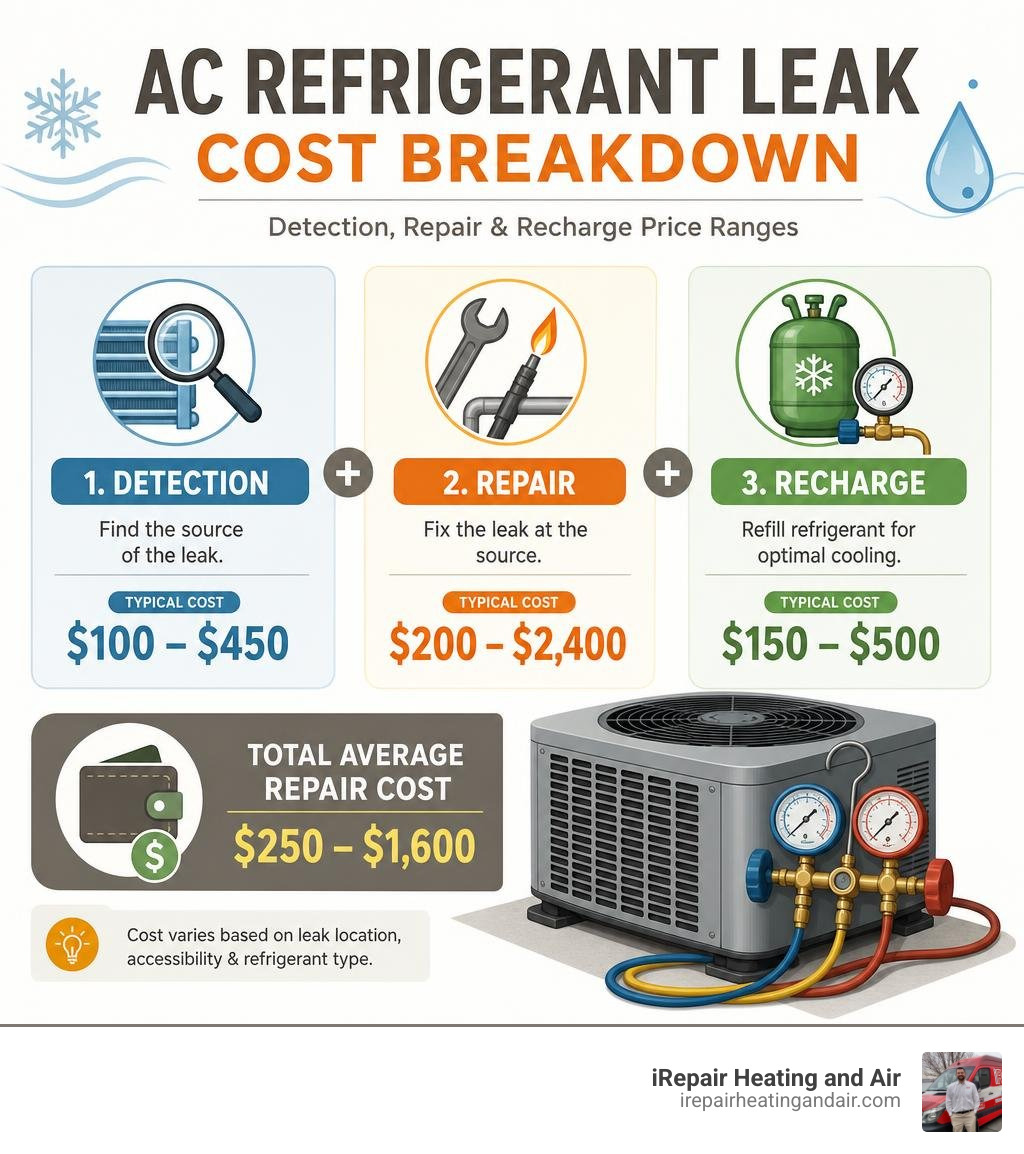
The cost to fix an AC leak typically falls between $200 and $1,500, with most Utah homeowners paying around $800 when all is said and done — that includes detection, repair, and refrigerant recharge.
Here's a quick snapshot of what you can expect to pay:
| Repair Type | Typical Cost Range |
|---|---|
| Leak detection only | $100 – $450 |
| Minor line or seal repair | $200 – $600 |
| Evaporator coil repair/replacement | $600 – $2,000 |
| Condenser coil repair/replacement | $900 – $2,400 |
| Refrigerant recharge (after repair) | $150 – $500 |
| Total average repair cost | $250 – $1,600 |
These numbers shift based on where the leak is, how hard it is to reach, and what type of refrigerant your system uses.
If your AC is blowing warm air in the middle of a Utah summer, a refrigerant leak is one of the most likely culprits — and one of the most urgent problems to address. Left unchecked, a small leak can quietly snowball into a compressor failure costing $1,500 to $6,000 or more. The sooner it's caught, the less it costs.
At iRepair Heating and Air, we've diagnosed and repaired hundreds of refrigerant leaks across the Wasatch Front, and we know exactly how confusing — and stressful — the cost to fix an AC leak can feel when you're not sure what you're dealing with. This guide breaks everything down so you can walk into any repair call with confidence.
Cost to fix ac leak terms to learn:
An air conditioner does not actually "consume" or burn up refrigerant. It runs on a closed loop, continuously recycling the same chemical blend to absorb heat from inside your home and dump it outdoors. If your system is low on refrigerant, there is only one explanation: you have a leak.
Spotting a leak early can save you thousands of dollars in replacement equipment. If you suspect something is wrong, starting with a guide on troubleshooting your air conditioner can help you rule out simple thermostat mistakes before calling in the pros.
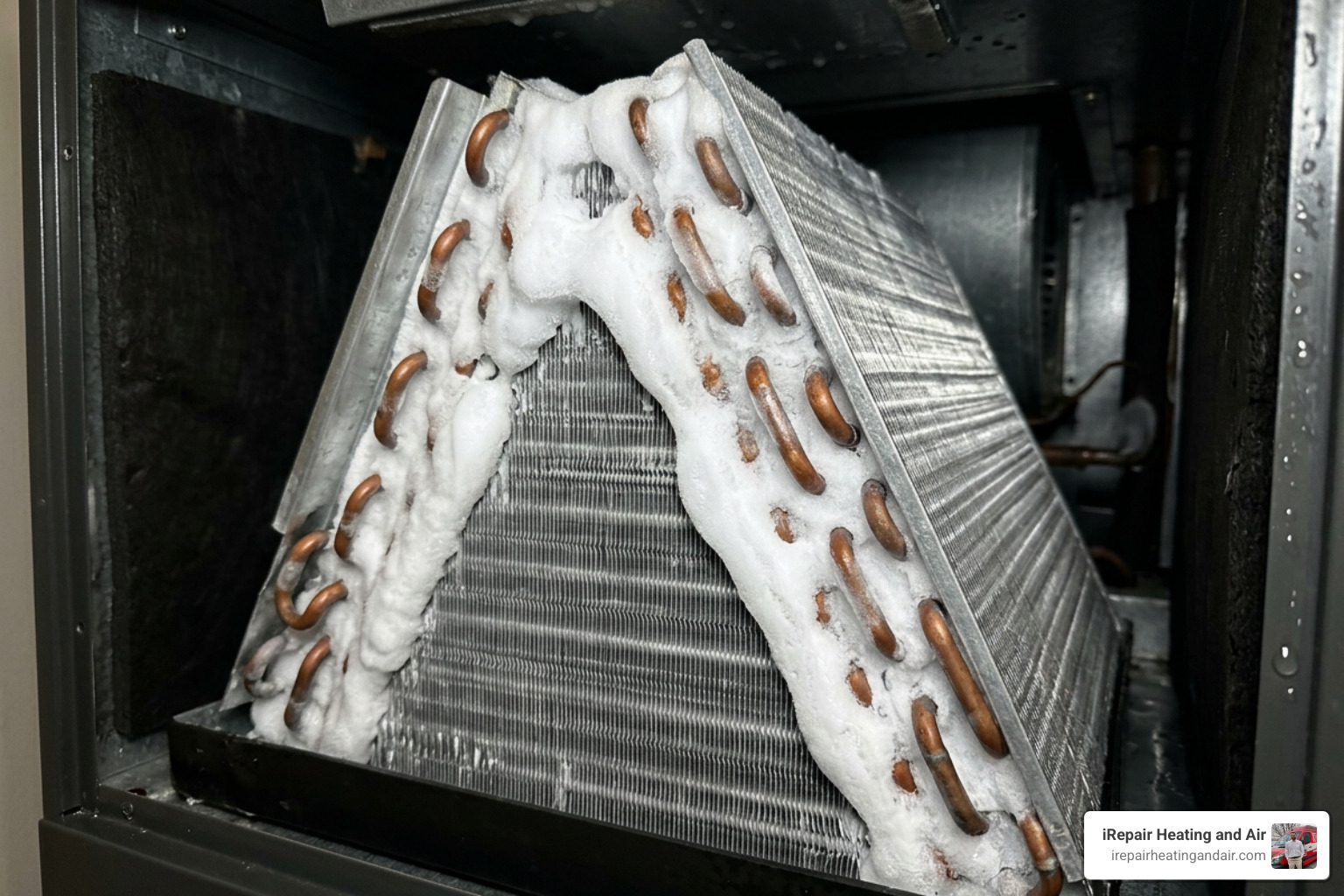
A refrigerant leak rarely announces itself with a massive puddle. Instead, it shows up in subtle, frustrating ways:
It is highly tempting to ignore a minor leak and just keep running your system. However, this is a recipe for system failure.
Because refrigerant cools the compressor motor itself, running a system low on charge causes the compressor to overheat. This leads to compressor burnout, which is essentially terminal heart failure for your AC unit. At that point, you are no longer looking at a minor repair; you are looking at a full system replacement.
Furthermore, older refrigerants like R-22 deplete the ozone layer, while modern alternatives like R-410A are potent greenhouse gases. Allowing these chemicals to escape freely into the environment is both ecologically irresponsible and federally prohibited.
Before a technician can give you an accurate cost to fix an AC leak, they have to find it. You should expect an initial diagnostic service call fee of $75 to $200 just to get an expert to your home. Many reputable contractors (including us) will apply this diagnostic fee toward the final cost of the repair if you choose to move forward with them.
For a detailed look at how professionals pinpoint these issues, you can read about AC leak detection methods.
Pinpointing a microscopic pinhole leak in hundreds of feet of copper tubing requires specialized tools. Depending on the complexity of your system, a technician will use one or more of these methods:
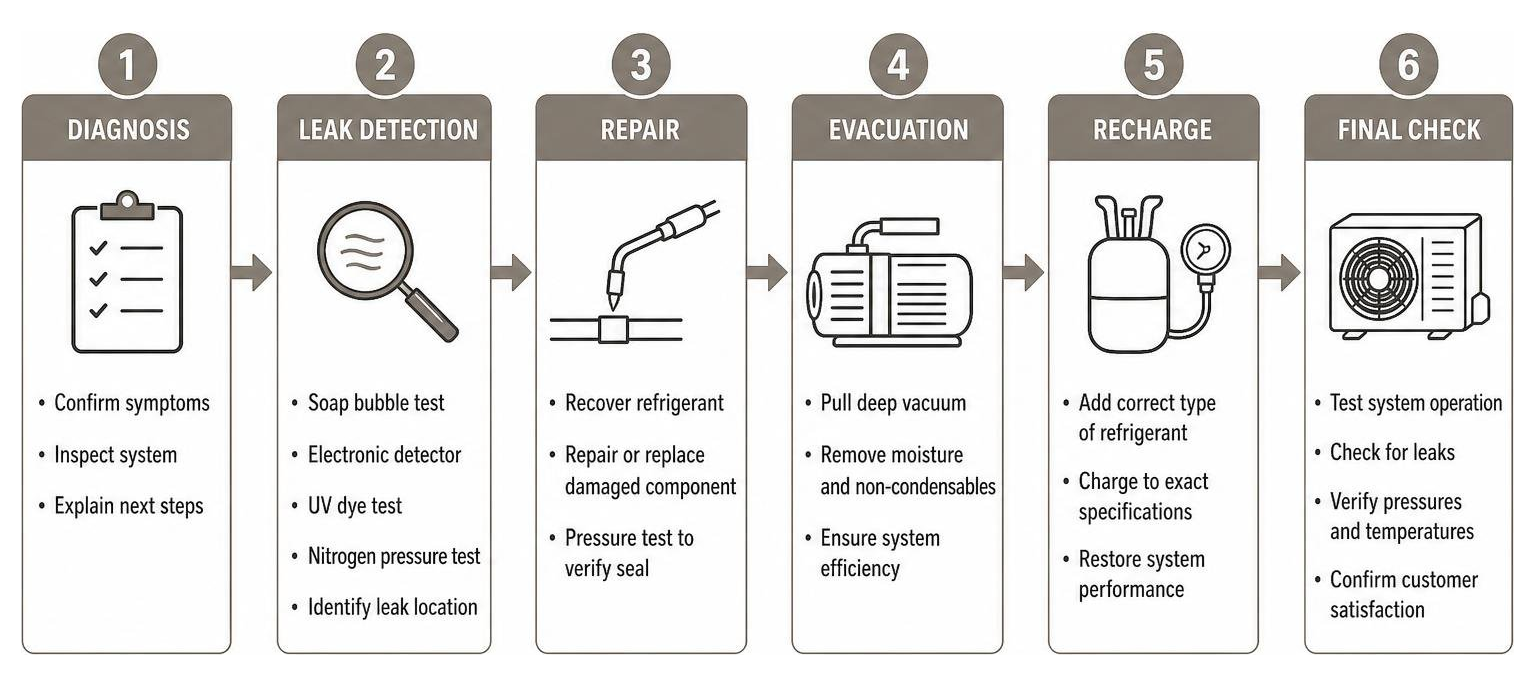
Once the leak is found, the repair bill will depend entirely on which part of the system has failed. Minor repairs on joints or service ports are relatively inexpensive, while replacing entire coils can be a major financial investment.
For a broader perspective on what homeowners nationwide are paying, check out average AC leak repair costs.
HVAC labor rates in Utah typically range from $75 to $150 per hour for standard scheduled maintenance and repairs. However, if your air conditioner breaks down on a scorching Sunday afternoon, emergency or after-hours service fees can push that rate up to $250 per hour.
To learn how to handle these stressful situations without overpaying, consult our emergency HVAC repair guide.
Once the leak is sealed, the system must undergo a "triple evacuation" (using a vacuum pump to remove all moisture and air) before it can be recharged. Refilling the system adds to the cost to fix an AC leak based on the type of refrigerant your system requires:
If you are facing a major repair bill on an older system, you have to ask yourself: is it worth pouring money into a sinking ship? If you live in the Salt Lake City area, checking out our SLC air conditioning repair roadmap can help you weigh your local options.
To make an informed choice, consult this AC repair vs replace decision guide.
A classic rule of thumb in the HVAC industry is the 5,000 Rule: multiply the age of your air conditioner by the estimated repair cost. If the result is over $5,000, it is generally wiser to replace the unit.
For example:
If you suspect it's time to retire your old unit, review our HVAC replacement cost guide to budget for a new install, and don't forget to look for savings with our guide on finding HVAC replacement discounts and deals.
You might see "DIY AC Leak Sealant Kits" sold online for $70 to $160. We strongly advise against using these.
Under EPA Section 608 regulations, it is illegal for anyone without federal certification to handle, purchase, or vent chemical refrigerants. Furthermore, DIY leak-sealant chemicals often react with moisture inside your system, creating a sticky sludge that permanently ruins your compressor and voids any remaining manufacturer warranties.
It is easy to confuse automotive AC repairs with home HVAC repairs, but they are entirely different beasts.
A car's air conditioning system is subjected to constant road vibrations, engine heat, and moving parts. Consequently, automotive leaks usually occur in rubber hoses, O-rings, or the compressor shaft seal.
A minor car AC leak fix can cost as little as $150 to $300 for a simple hose replacement and recharge. For reliable auto repairs in Utah, you can check out car AC repair services in Ogden or Auto AC Repair in Provo, UT.
In small quantities, a slow refrigerant leak outdoors poses very little immediate physical danger to your household. However, a major, sudden leak inside your home can be hazardous. Refrigerant gases are heavier than air and can settle in basement rooms or low-lying areas, displacing oxygen and acting as an asphyxiant.
If you suspect a massive indoor leak, turn off the system, open your windows to ventilate the home, and step outside.
No. Aside from being environmentally damaging, "topping off" a leaking system without repairing the source of the leak is a temporary band-aid. The newly added refrigerant will simply escape again, draining your wallet in the process.
Additionally, running a system with incorrect pressure levels will rapidly wear out the compressor, turning a minor repair into a major replacement.
In 95% of cases, no. Homeowners insurance is designed to cover sudden, accidental damage (like a lightning strike or a fallen tree branch crushing your outdoor condenser). It does not cover normal wear and tear, corrosion, or slow refrigerant leaks that develop over years of use.
A leaking air conditioner can make your home feel like a sauna and your wallet break a sweat, but you don't have to navigate it alone. The single best way to avoid a massive cost to fix an AC leak is through consistent, proactive care.
By scheduling regular maintenance, you can catch tiny pinhole leaks before they starve your compressor of oil and burn it out. If you are in the Salt Lake City area, check out our Salt Lake City maintenance tips to keep your system humming efficiently. If you are a bit further north, you can read about why regular air conditioning service in Ogden is a breeze.
When things do go sideways, we are here to help. We provide fast, honest, and professional service across the Wasatch Front — from Salt Lake City and Sandy to Ogden, Provo, and Park City. We pride ourselves on fair, upfront pricing with absolutely zero hidden fees.
Don't spend another day sweating in your own living room. Contact iRepair Heating and Air today, and let’s get your home back to a comfortable, crisp oasis!
