
Call 801-233-1564
Serving Salt Lake • Ogden • Provo • Park City
Licensed Contractor
If you need to fix air conditioner problems fast, here are the most common fixes you can try right now:
If none of these restore cooling, you likely need a professional technician for refrigerant or electrical issues.
It's a sweltering July afternoon in Salt Lake City, and your AC just quit. The thermostat is climbing, the air is thick, and you need answers now. The good news? Most AC breakdowns trace back to just a handful of simple problems — many of which you can fix yourself in under 30 minutes without spending a dime on a service call.
This guide walks you through every step: from basic DIY fixes to knowing when a professional needs to take over, plus how to decide whether repairing or replacing your unit makes better financial sense.
At iRepair Heating & Air, we are a family-owned HVAC company serving Utah's Wasatch Front — and our team has diagnosed and resolved thousands of AC failures across Salt Lake City, Ogden, Provo, and Park City. We've built this guide based on the same troubleshooting process our certified technicians use every day to fix air conditioner problems quickly and affordably. Let's get your home cool again.
Before you pick up the phone to schedule an emergency service call along the Wasatch Front, let’s see if we can get your system running with some basic DIY troubleshooting. Many common air conditioning hiccups do not require a professional license to solve.
However, before touching any internal components, we must emphasize safety. Air conditioners run on high-voltage electricity and contain pressurized chemicals.
By following these safety guidelines and consulting a reputable DIY AC Repair Guide, you can confidently rule out the simple issues before calling in our team.
Did you know that a clogged air filter is the single most common cause of AC problems, accounting for roughly 50% of all residential AC service calls?
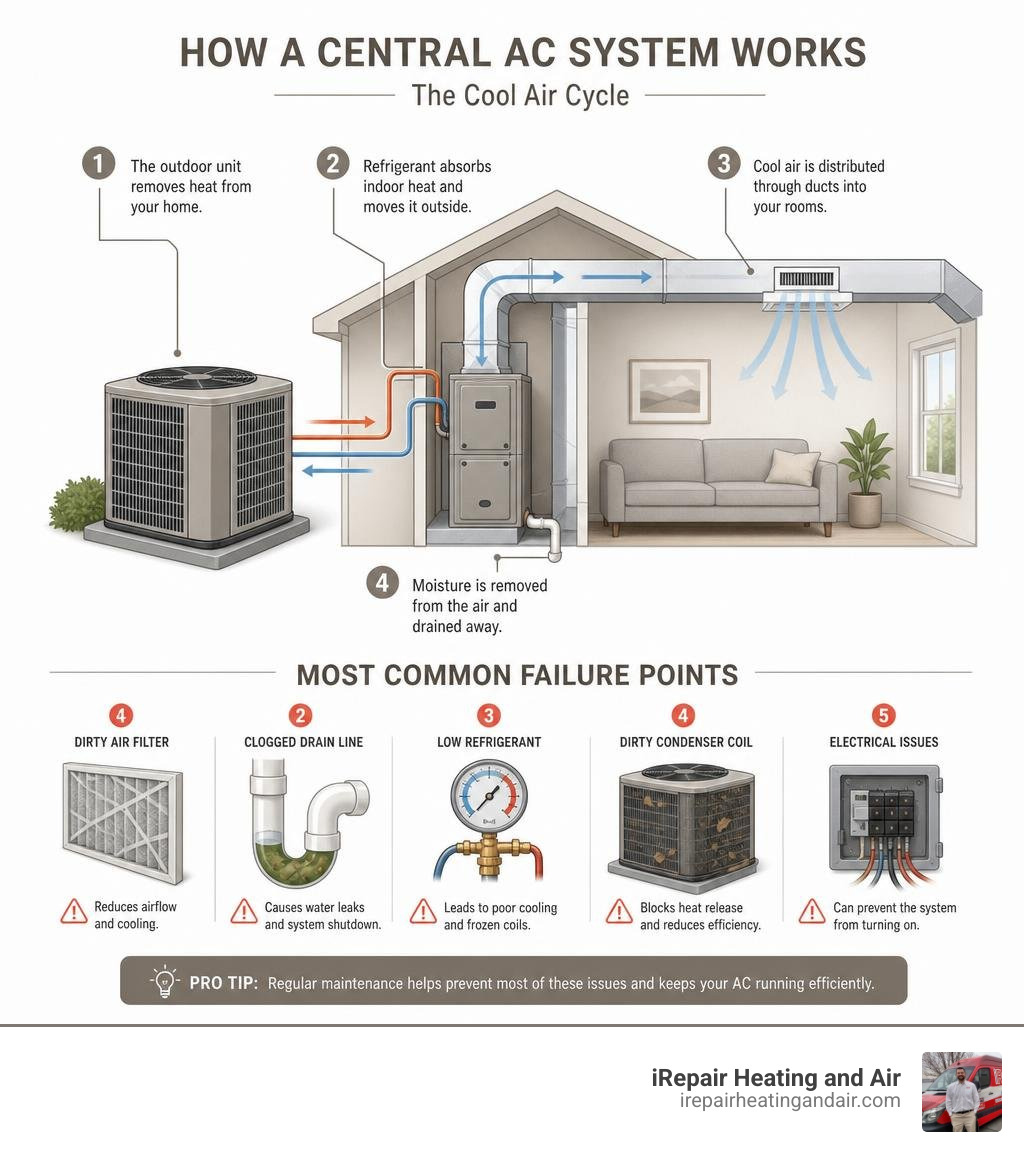
When an air filter is caked with dust, pet dander, and debris, it restricts airflow. This lack of airflow prevents warm indoor air from passing over your cold evaporator coils. Without that warm air, the temperature of the coil drops below freezing, causing the humidity in the air to freeze directly onto the metal.
If you notice weak airflow or ice building up on your indoor or outdoor copper lines, your filter is likely the culprit. To keep your system breathing easily, review our Summer AC Prep Guide and make it a habit to replace your filter every 30 to 90 days—or monthly if you have pets.
As your air conditioner cools your home, it also dehumidifies the air. A standard 3-ton residential AC unit can extract 20 to 30 gallons of water from your indoor air every single day! This water drips into a drain pan and flows outside through a PVC condensate drain line.
Over time, algae, mold, and dust can build up inside this wet pipe, forming a thick clog. When the water cannot drain, it pools in the drain pan. Modern systems feature a safety float switch that automatically shuts down the entire system to prevent water damage to your ceilings and floors.
To clear a clogged drain line:
For more visual guidance on maintaining your system's plumbing, you can check out The Spruce AC Repair Guide.
Your outdoor unit’s job is to release the heat collected from inside your home out into the wild. If the metal fins on your condenser are wrapped in grass clippings, cottonwood seeds, or dirt, that heat gets trapped.
A severely dirty condenser can increase your monthly energy consumption by up to 15% and put immense strain on your compressor. To clean it:
Regularly clearing this debris is one of the best Salt Lake City AC Maintenance Tips to extend your equipment's lifespan.
Sometimes, the issue isn't mechanical at all—it's electrical. If your AC won't turn on at all, follow these steps:
For a deeper dive into how your home's electrical and heating systems interact, read our guide on Air and Heat Repair 101.
While DIY fixes are great for your wallet, some repairs require specialized tools, training, and certifications. Attempting to manage high-voltage wiring or chemical refrigerants yourself can void your manufacturer’s warranty, lead to costly code violations, or result in severe injury.
To help you decide when to put down the screwdriver and call us, here is a quick comparison of average costs in 2026:
| AC Repair Type | DIY Cost Range | Professional Cost Range (2026) | Complexity Level |
|---|---|---|---|
| Air Filter Replacement | $10 – $50 | $50 – $100 (Usually part of a tune-up) | Very Low (DIY) |
| Condensate Drain Flush | $5 – $15 | $150 – $300 | Low (DIY-friendly) |
| Capacitor Replacement | $15 – $50 | $150 – $400 | Medium (High Voltage Risk) |
| Blower Motor Replacement | N/A (Pro Only) | $300 – $700 | High (Professional) |
| Refrigerant Leak & Recharge | N/A (Pro Only) | $200 – $1,200+ | Very High (EPA License Required) |
| Compressor Replacement | N/A (Pro Only) | $900 – $2,900+ | Expert (Professional Only) |
If you are dealing with a complete system breakdown during a hot Utah summer week, our SLC Emergency HVAC Repair Guide can help you manage your home's temperature while waiting for our same-day emergency technician to arrive.
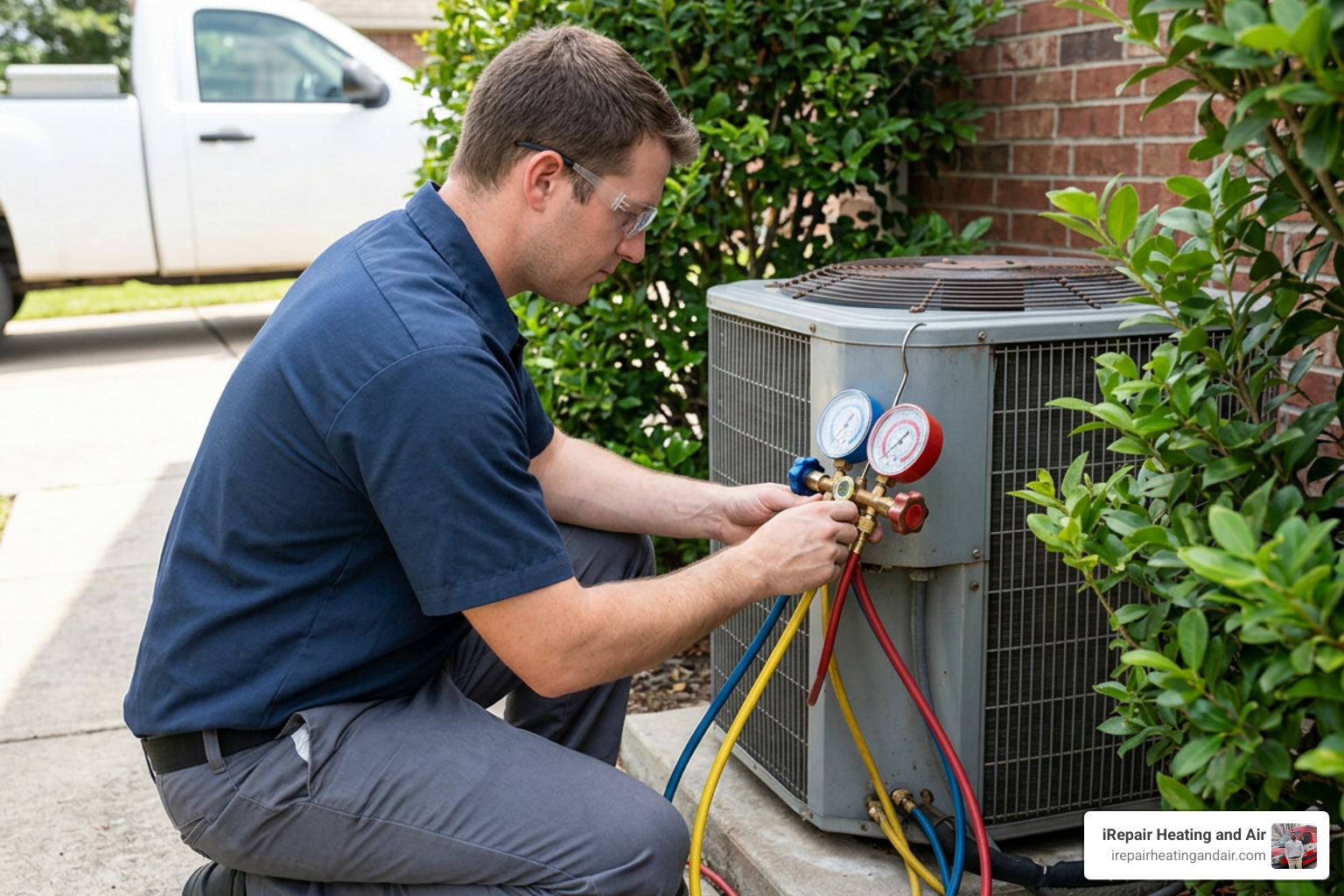
Your air conditioner's refrigerant operates in a closed loop. It is never "used up" or consumed. If your system is low on refrigerant, you have a leak.
Signs of a refrigerant leak include:
Running an AC with low refrigerant can cause liquid refrigerant to flood back into the compressor—a destructive process known as "slugging." This can permanently destroy your compressor, which is the expensive "heart" of your outdoor unit. If you suspect a leak, turn off your system immediately and explore your Air Conditioning Repair Ogden Options.
The capacitor is a small, cylindrical component inside your outdoor unit's electrical panel that acts like a temporary battery. It provides the high-voltage electrical jolt needed to start up your compressor and fan motor. The contactor is the physical switch that closes to send 220-volt power to those motors when your thermostat calls for cooling.
Because Utah summers can bring intense heat waves and sudden summer electrical storms, capacitors are subjected to extreme stress and often fail. You can tell a capacitor is failing if you hear a clicking or humming sound from your outdoor unit, but the fan blade refuses to spin.
While replacing a capacitor is a common repair, working inside the electrical panel carries a severe risk of shock. If you prefer to leave electrical handling to the experts, we offer fast, reliable, and Effective HVAC Repair Solutions to get your system safely humming again.
No air conditioner lasts forever. While a well-maintained central air conditioner typically lasts between 15 and 20 years, its operating efficiency drops significantly after the 10-year mark. When faced with an expensive repair quote on an aging system, you have to ask yourself: Is it time to stop patching it up and upgrade instead?
Modern cooling systems are built to meet strict SEER2 (Seasonal Energy Efficiency Ratio) standards, meaning a new unit will use up to 30% less electricity than a system installed a decade ago. To help calculate the math for your home, you can use the BTU Size Replace vs Repair Calculator.
A classic industry benchmark used by homeowners and technicians alike is the $5,000 Rule.
To apply this rule, multiply the age of your air conditioner by the cost of the repair quote:
For example, if you have an 8-year-old system facing a $400 capacitor repair, the calculation is $3,200. Since it is below $5,000, we recommend fixing it. However, if you have a 14-year-old system facing a $900 blower motor repair, the calculation is $12,600. In this scenario, investing in Professional AC Replacement in Salt Lake City is the smarter long-term financial move.
Another excellent guideline is the 50% Rule: if the cost of a single repair exceeds 50% of the cost of a brand-new system, you should replace it regardless of the unit's age.
Additionally, pay close attention to the type of refrigerant your system uses:
If you are unsure where your system stands, contact our team for trusted advice on iRepair Heating and Air Park City Services.
This is usually caused by restricted airflow or a heat transfer issue. Start by checking your air filter; if it is clogged, it will choke your system's airflow and freeze the evaporator coils.
If your filter is clean, head outside and check if the condenser unit is running and free of debris. If the outdoor fan is spinning but the air coming out of the vents is lukewarm, you may have a refrigerant leak or a failing compressor. To learn more about how routine maintenance keeps your airflow healthy, read about the Ogden AC Service Benefits.
In 2026, typical professional AC repairs along the Wasatch Front range from $150 to $1,500. Minor electrical repairs like replacing a capacitor or contactor generally cost between $150 and $400. Mid-range repairs, such as replacing a condensate pump or fan motor, run from $300 to $700. Major component replacements—like an evaporator coil or compressor—can easily exceed $1,500.
Most reputable companies charge a diagnostic fee between $75 and $150 to locate the problem, which is often waived if you move forward with the repair. For transparent pricing and honest assessments, visit our portal for iRepair Heating and Air AC Maintenance.
We recommend scheduling a professional AC tune-up once a year, ideally in the spring before the summer heat hits. Proactive maintenance is proven to prevent up to 85% of unexpected breakdowns and can lower your monthly utility bills by keeping your system operating at peak efficiency.
Between professional visits, your main job is to check your air filters monthly and keep your outdoor unit clear of weeds, leaves, and dirt.
When your air conditioner stops working, it doesn't take long for your home to go from a sanctuary to an oven. Fortunately, by checking your air filter, clearing your condensate drain, resetting your breakers, and cleaning your condenser coils, you can resolve many common issues on your own.
But when the DIY fixes aren't enough, you don't have to sweat it out. At iRepair Heating and Air, we are proud to offer same-day emergency services, family-owned care, and fair, upfront pricing across Salt Lake City, Ogden, Provo, Park City, and the surrounding Wasatch Front areas.
Whether you need a quick repair or are ready to map out a replacement plan, we've got you covered. Check out our SLC Air Conditioning Repair Roadmap to schedule your service with us today!
