

Call 801-233-1564
Serving Salt Lake • Ogden • Provo • Park City
Licensed Contractor

A drain pan for hot water heater units is one of the simplest — and most overlooked — ways to protect your home from serious water damage.
Quick answer: A water heater drain pan is a shallow basin placed under your water heater to catch leaks before they reach your floors, walls, and home structure. Here's what you need to know at a glance:
Water heaters can fail without warning. And when they do, the damage to flooring, drywall, and structural components can cost far more than the heater itself. A properly installed drain pan is your first line of defense — quietly doing its job until the day you actually need it.
At iRepair Heating and Air, we have seen how a simple drain pan for a hot water heater can mean the difference between a quick fix and a costly flood restoration. In this guide, we'll walk you through everything you need to know — from choosing the right pan to getting it installed correctly.
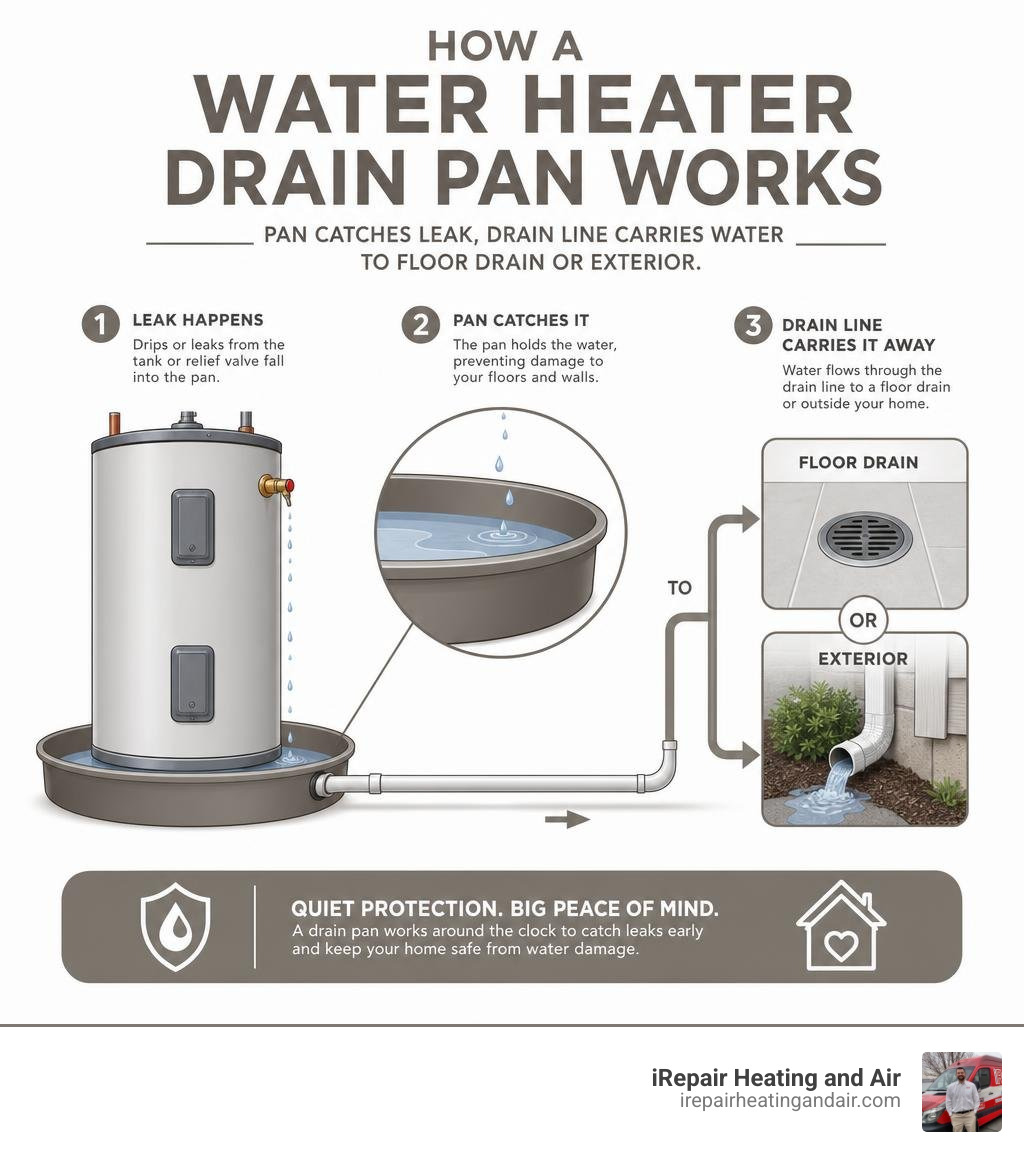
At its core, a drain pan for hot water heater systems is a shallow container designed to sit directly beneath your water heating tank. Its primary job is simple: collect any unexpected water runoff and guide it safely away from your home's structure.
Water heaters can fail in several ways. Over time, internal sediment builds up and creates hot spots, accelerating the corrosion of the steel tank. When the tank shell eventually rusts through, water begins to seep out. Additionally, the Temperature and Pressure (T&P) relief valve — a critical safety feature on every unit — can discharge water if the system overheats or over-pressurizes. Without a pan, this water pools on your floor, soaking into drywall, framing, and subfloors.
If your water heater is located on an upper floor, in an attic, or inside a finished closet, a leak can quickly turn into a multi-room catastrophe. Even a slow, unnoticed drip can lead to toxic mold growth and rotted floor joists. A quality drain pan serves as leak insurance. When a leak occurs, the pan contains the water and directs it into an attached drain line, which carries the liquid safely to a floor drain, sump pit, or outside your home.
If you are already dealing with an aging, leaky system, you might be weighing your options. Check out our guide on The Great Debate: Navigating Water Heater Repair vs Replacement to help you decide your next steps.
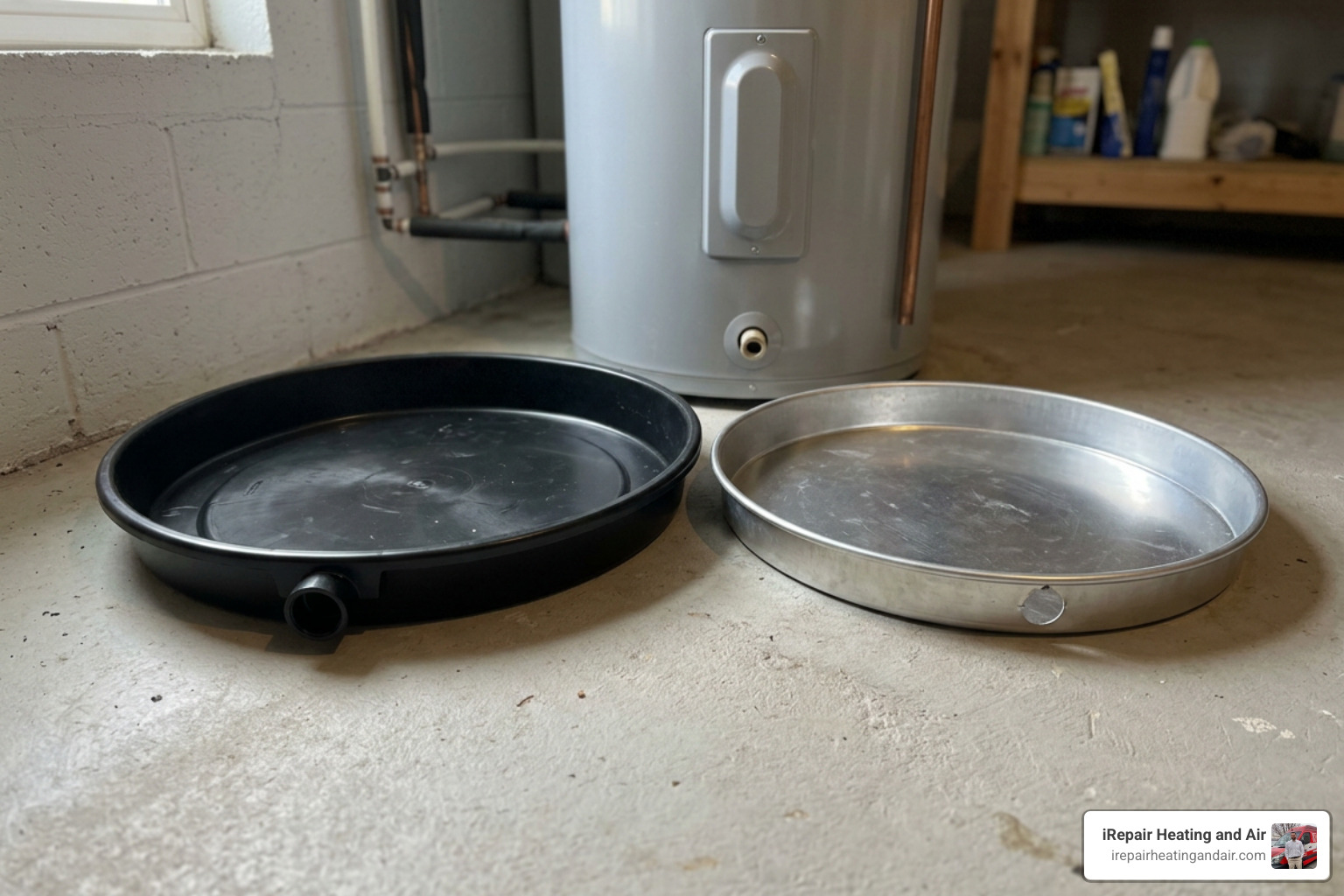
Selecting the right pan requires understanding the differences in materials, calculating the correct size, and getting the right fittings for a watertight seal. If you want to keep your entire system in top-tier shape, read our expert tips on How to Maintain Your Water Heater Tank Without Getting Burned.
Water heater pans are generally made from either plastic (polypropylene) or metal (aluminum or galvanized steel). Each has its own set of pros and cons depending on your water heater type and local building codes.
| Material | Best For | Pros | Cons |
|---|---|---|---|
| Plastic | Electric Water Heaters | Inexpensive, won't rust, easy to handle | Can crack over time, not for gas units |
| Aluminum | Gas & Electric Heaters | Rust-resistant, durable, code-compliant | Slightly more expensive than plastic |
| Galvanized Steel | Heavy-duty / Gas Heaters | Extremely tough, fireproof | Heavy, can corrode over decades |
Getting the correct size is crucial. If the pan is too small, the water heater won't sit flat, or the T&P valve discharge line won't drip inside the pan.
To find the right size:
Most pans come with a pre-drilled side opening or a knockout hole designed to fit a 1-inch or 1.5-inch PVC or CPVC drain fitting. Always use a high-quality drain adapter wrapped in Teflon tape to create a watertight connection where the pipe meets the pan.
Installing a drain pan for hot water heater systems isn't just a smart recommendation — it is often a strict legal requirement. Both the International Plumbing Code (IPC) and the Uniform Plumbing Code (UPC) mandate that a drain pan must be installed under any water heater located in an attic, an upper-floor ceiling space, or any location where a leak could cause structural damage to the home.
According to standard Water Heater Drain Pan Code: Your Installation Guide - Water System Wiki , the pan must be made of an approved corrosion-resistant material and must have a minimum depth of 1.5 inches. Crucially, the code states that the pan must drain independently to an approved location. You cannot simply let the pan sit there and fill up with water; it must have a functional, sloped drain line connected to it.
To meet local plumbing codes in Utah (including Salt Lake City, Provo, Sandy, and Ogden), your drain line must follow these strict guidelines:
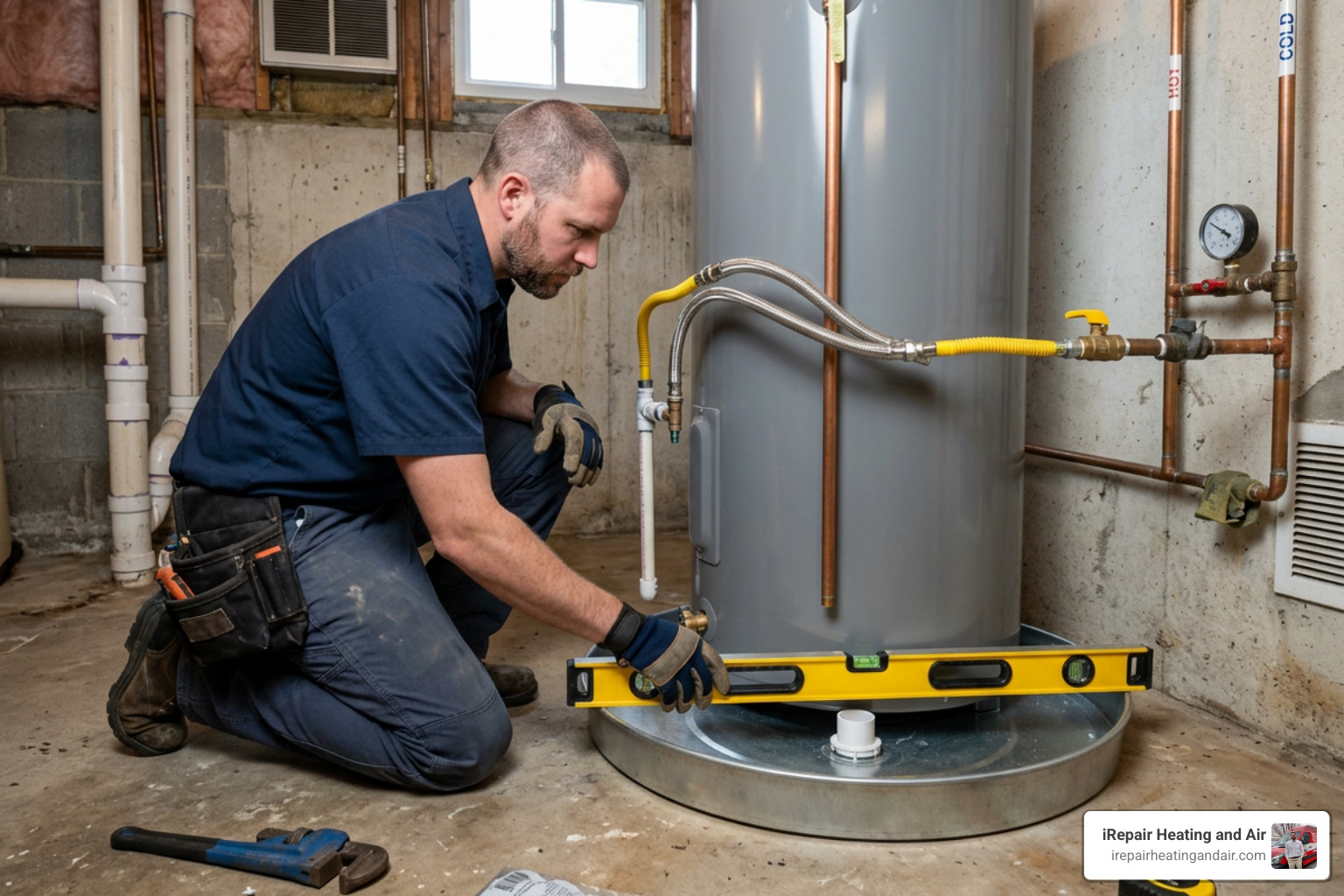
Installing a drain pan during a brand-new water heater installation is straightforward. You simply level the floor, center the pan in place, align the drain outlet with your planned drain path, and lower the new, empty water heater directly into the center of the pan.
However, retrofitting a pan under an existing, fully operational water heater is a much bigger challenge. A standard 50-gallon water heater weighs over 400 pounds when full of water. Attempting to lift or slide a heavy tank without proper preparation can result in severe injury, broken gas lines, or ruptured water pipes.
If you are replacing an old, failing unit entirely, check out our guide on The Ultimate Breakdown of Water Heater Replacement Costs to budget for your project.
If you want to tackle retrofitting a pan under an existing unit yourself, follow these steps carefully:
Finding water in your pan can be alarming. For comprehensive local support, you can explore The Best Water Heater Maintenance Services in Sandy to keep your system running smoothly.
The drain pan must be placed on a flat, level, and fully supported surface directly beneath the water heater. Ensure the pan's drain outlet is pointed in the direction of your planned drain line path before lowering the heavy tank onto it.
The drain line must maintain a continuous downward slope of at least 1/4 inch per foot. This ensures that gravity can quickly pull any leaking water away from the pan, preventing stagnation and back-ups.
The line must terminate in an open, visible location where you can easily spot a leak if one occurs. Excellent termination points include a nearby floor drain, a sump basin, or piped through an exterior wall to discharge outside, safely away from your home's concrete foundation.
A drain pan for hot water heater setups is a small investment that delivers massive peace of mind. Whether you are installing a brand-new system or looking to safeguard your existing home, ensuring you have a code-compliant, properly sloped drain pan is non-negotiable.
While some brave DIYers may attempt to install a pan themselves, lifting a heavy water heater and aligning gas lines, electrical hookups, and plumbing drains is a job best left to licensed professionals. A single mistake can lead to gas leaks, electrical hazards, or the very water damage you were trying to avoid.
At iRepair Heating and Air, we provide fast, professional plumbing and water heater services across the Wasatch Front — including Salt Lake City, Sandy, Provo, Ogden, and Park City. We offer same-day emergency service, family-owned care, and fair, transparent pricing.
Ready to secure your home against water damage? Book your service online or read more about our Hot Water Happiness and Professional Water Heater Installation Provo to schedule an appointment with our expert team today!